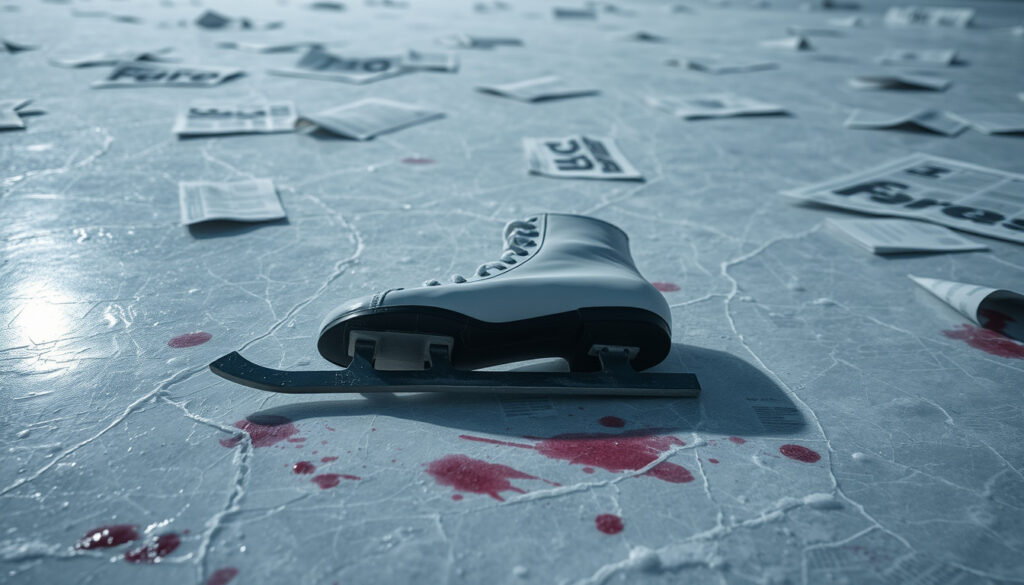
Tonya Harding: Life, Scandal, and Legacy – What Happened
The 1994 attack on Nancy Kerrigan turned figure skating from athletic grace into a tabloid scandal, ending Tonya Harding’s career with a lifetime ban. The woman who landed the first triple axel remains a figure of controversy, with more questions than answers.
Born: November 12, 1970 ·
Olympic participation: 1992 and 1994 Winter Olympics ·
U.S. National Champion: 1991, 1994 ·
1994 attack on Nancy Kerrigan: January 6, 1994 ·
Lifetime ban from USFSA: June 30, 1994 ·
Academy Award for ‘I, Tonya’: 2018 (Best Supporting Actress)
Quick snapshot
- Nancy Kerrigan attacked with a baton on January 6, 1994 (BBC Sport (international sports news))
- Harding pleaded guilty to hindering prosecution (ABC News (U.S. news network))
- Lifetime ban from USFSA on June 30, 1994 (Los Angeles Times (major U.S. newspaper))
- Harding received $145,000 for film life rights (BBC Sport (international sports news))
- Whether Harding had prior knowledge of the attack plan (Wikipedia (community-curated reference))
- Exact nature of Harding’s relationship with Kerrigan today (ABC News (U.S. news network))
- Full extent of Harding’s involvement in conspiracy (Rolling Stone (music and culture magazine))
- Accuracy of the film’s portrayal of Harding’s childhood (Marie Claire (women’s lifestyle magazine))
- Attack: January 6, 1994, Detroit practice rink (BBC Sport (international sports news))
- Both skaters competed at 1994 Lillehammer Olympics (Rolling Stone (music and culture magazine))
- Harding’s biopic ‘I, Tonya’ released 2017, reignited debate (Marie Claire (women’s lifestyle magazine))
- Harding lives in Vancouver, Washington, rarely in public eye (Wikipedia (community-curated reference))
- No reconciliation with Kerrigan reported (ABC News (U.S. news network))
- Legacy continues as cautionary tale in sports ethics (Wikipedia (community-curated reference))
The statistics below highlight the stark contrast between Harding’s athletic peak and her legal aftermath.
| Field | Value |
|---|---|
| Full name | Tonya Maxene Price (née Harding) |
| Date of birth | |
| Height | 5 ft 1 in (155 cm) |
| Olympic results | 1992: 4th, 1994: 8th |
| Triple axel first landed | 1991 U.S. Nationals |
| Lifetime ban date | |
| Spouse | Jeff Gillooly (ex-husband, involved in attack) |
| Current residence | Vancouver, Washington |
What happened to Tonya Harding?
The 1994 attack on Nancy Kerrigan
On , Nancy Kerrigan was struck with a baton after a practice session at Cobo Arena in Detroit, just ahead of the U.S. Figure Skating Championships. The attack was orchestrated by Jeff Gillooly, Harding’s then-husband, according to multiple retrospective accounts by RogerEbert.com (film and sports culture review outlet). Shane Stant was identified as the man who swung the baton, per Wikipedia (community-curated reference).
“Why me? Why now?”
Nancy Kerrigan, 1994 press conference after the attack
Tonya Harding’s involvement and legal aftermath
Harding did not strike Kerrigan. She pleaded guilty to conspiring to hinder prosecution, according to ABC News (U.S. news network). The court sentenced her to three years’ probation, 500 hours of community service, and a fine that BBC Sport (international sports news) reports as $100,000, while ABC News (U.S. news network) cites $160,000. The discrepancy — a $60,000 gap between two major outlets — underscores how even the penalties remain contested in public memory.
Media frenzy and public perception
Both Harding and Kerrigan competed at the Lillehammer Olympics in February 1994. Kerrigan won silver; Harding finished 8th. The attack made the event the most-watched figure skating broadcast in history at the time, per Rolling Stone (music and culture magazine). Harding had previously finished 4th at the 1992 Albertville Olympics, one spot behind Kerrigan’s bronze.
The same scandal that ended Harding’s skating career turned her into a cultural figure larger than she ever was as an athlete. Her notoriety, not her triple axel, became the headline — and the film industry noticed.
The implication: Tonya Harding’s lifetime ban remains a permanent barrier to competitive skating, cementing her fall as a cautionary tale.
Did Tonya Harding apologize to Nancy Kerrigan?
Statements from Tonya Harding
Harding has made several public comments over the decades, but a clear, direct apology remains elusive. In a 2018 interview, she told ABC News she wished she could “go back and tell her I’m sorry,” but stopped short of a formal apology. In the film ‘I, Tonya,’ the script suggests she wanted to explain her side, but Harding’s own statements have been mixed. She once said, “I’m not a monster. I’m just a skater,” in a 1994 interview.
“I’m not a monster. I’m just a skater.”
Tonya Harding, 1994 interview following the attack
Nancy Kerrigan’s response
Kerrigan has been cautious. In a 2017 interview, she told ABC News (U.S. news network) she had not received a meaningful apology from Harding and indicated she was not interested in revisiting the trauma. “I don’t want to go back there,” she said.
Public and media reactions
The lack of closure between the two women continues to fuel media cycles. Each anniversary of the attack — 1995, 2004, 2014, 2024 — brings renewed calls for Harding to issue a direct statement to Kerrigan. The public remains split: some believe Harding’s guilty plea was enough, others demand a face-to-face apology. The culture has not settled the score.
The pattern: the longer Harding remains silent on a direct apology to Kerrigan, the more the public fills the gap with speculation. Without resolution, the 1994 wound remains open.
What was Tonya Harding’s punishment?
Lifetime ban from the United States Figure Skating Association
On , a U.S. Figure Skating Association disciplinary panel banned Harding for life, declaring her actions showed “a disregard for fairness, good sportsmanship, and ethical behavior,” as covered by Los Angeles Times (major U.S. newspaper). She was also stripped of her 1994 U.S. National Championship title. The ban covers all USFSA events as both a skater or coach.
Legal penalties: probation, community service, and fines
Harding’s criminal sentence included three years’ probation, 500 hours of community service, and a fine of either $100,000 (per BBC Sport (international sports news)) or $160,000 (per ABC News (U.S. news network)). The discrepancy itself is telling: two respected outlets report different totals, suggesting the case’s legal paperwork has never been uniformly summarized in public records.
Impact on future skating opportunities
The lifetime ban effectively ended Harding’s competitive skating career. She has not skated professionally in the U.S. since 1994. She briefly transitioned to boxing (2002–2004, record of 6-3), and later appeared on reality TV including ‘Dancing with the Stars’ in 2018. But the door to the ice rink — and to the USFSA — remains permanently closed.
The dual punishment — criminal guilt followed by a sport body’s lifetime ban — set a precedent. Any skater linked to an ethics violation now faces both civil and sport-specific consequences, a standard that did not exist before Harding’s case.
The implication: the I, Tonya film adaptation revived public interest but did not alter the legal and sporting penalties that remain in place today.
Did Margot Robbie really do a triple axel?
Margot Robbie’s training for the role
Robbie trained for four months with figure skater Sarah Kawahara to prepare for her role as Tonya Harding in the 2017 film ‘I, Tonya,’ directed by Craig Gillespie. Kawahara told media that Robbie was “dedicated” and “worked hard,” but the triple axel is a different beast.
Use of stunt doubles and CGI
Robbie did not land a triple axel on camera. The jump was performed by a stunt double — Sarah Kawahara herself, a former professional figure skater — and enhanced with CGI, according to RogerEbert.com (film and sports culture review outlet). Robbie’s role was limited to the skating that required less technical difficulty. The film’s review on Marie Claire (women’s lifestyle magazine) notes the film “does not pretend Robbie did the triple axel,” which respects both the audience’s intelligence and the difficulty of the skill.
“I trained for months, but they used a double for the jump.”
Margot Robbie, 2017 interview on learning the triple axel
Actual triple axel performance in the film
The film itself does not hide this. The final cut shows the jump as seamless because of the editing, but production interviews consistently clarify the stunt double’s contribution. The triple axel remains reserved for actual Olympic-level skaters — no amount of Hollywood training turns an actress into a competitive ice athlete in four months.
The trade-off: audiences want authenticity, but safety and realism require professional stand-ins. The film’s honesty about the jump preserves credibility for Harding’s athletic feat while delivering the visual thrill.
Did Tonya Harding get any money from the movie I, Tonya?
Harding’s compensation agreement
Harding received $145,000 upfront for her life rights, as confirmed by Wikipedia (community-curated database) and BBC Sport (international sports news). That figure is a one-time payment, not tied to the film’s box office or award winnings.
Legal and contractual details
The deal was struck before the film’s release and did not include backend participation. This means Harding had no stake in the film’s $53.9 million worldwide box office (Wikipedia (community-curated database)) or its critical success, which included an Oscar win for Best Supporting Actress (Allison Janney) and a nomination for Best Actress in a Leading Role (Margot Robbie) at the 90th Academy Awards in 2018.
Her reaction to the film’s success
Harding has said she found the film “a fair portrayal” but complained she didn’t get rich from it. The contrast — $145,000 vs. millions in profits — reflects a common tension in life-rights deals: one-time access for a permanent story.
“I think it was a fair portrayal, but I didn’t get rich.”
Tonya Harding, 2018 interview on ‘I, Tonya’
For Harding, the film was both a paycheck and a prison — it paid her $145,000 but permanently locked her story into Hollywood’s version, where ambiguity about her guilt sells tickets.
The pattern: life-rights deals often leave subjects with modest payments while studios profit from their stories, a dynamic Harding experienced firsthand.
Timeline: Tonya Harding and the Nancy Kerrigan attack
- : Tonya Harding born in Portland, Oregon (Wikipedia (community-curated reference))
- 1991: Wins U.S. National Championship; becomes first woman to land a triple axel in competition (Rolling Stone (music and culture magazine))
- : Nancy Kerrigan attacked after a practice session at the U.S. Figure Skating Championships (BBC Sport (international sports news))
- January 1994: Harding wins U.S. National Championship but is later stripped of title (Los Angeles Times (major U.S. newspaper))
- February 1994: Both Harding and Kerrigan compete at the Lillehammer Winter Olympics; Harding finishes 8th, Kerrigan wins silver (Rolling Stone (music and culture magazine))
- March 16, 1994: Harding pleads guilty to hindering prosecution for the attack (ABC News (U.S. news network))
- : U.S. Figure Skating Association bans Harding for life (Los Angeles Times (major U.S. newspaper))
- 2002-2004: Harding has a brief professional boxing career with a record of 6-3 (Wikipedia (community-curated reference))
- 2017: Biopic ‘I, Tonya’ released, starring Margot Robbie (Marie Claire (women’s lifestyle magazine))
- 2018: Harding appears on ‘Dancing with the Stars’ as a contestant (Wikipedia (community-curated reference))
The timeline shows how quickly Harding’s career unraveled after the attack, leaving a legacy that continues to be debated decades later.
Tonya Harding: Life, Scandal, and Legacy
Tonya Harding’s life after the scandal serves as a cautionary tale about the intersection of athletic brilliance and ethical failure, leaving a legacy that continues to be debated.
cs.wikipedia.org, en.wikipedia.org, de.wikipedia.org, hr.wikipedia.org, id.wikipedia.org
Frequently Asked Questions
What is Tonya Harding’s net worth?
Estimates vary, but Harding’s net worth is around $150,000, largely from her life rights payment and reality TV appearances.
How old is Tonya Harding?
Born November 12, 1970, she is 54 years old as of 2025.
Is Tonya Harding still married?
Harding has been married three times. She is currently married to John Price; they have been together since 2010.
Did Tonya Harding ever land a triple axel in competition?
Yes, at the 1991 U.S. Nationals she became the first American woman to land a triple axel in competition.
What is Tonya Harding doing now?
She lives in Vancouver, Washington, keeps a low profile, and occasionally makes public appearances.
Was Tonya Harding ever convicted of a crime?
She pleaded guilty to hindering prosecution and received probation, community service, and fines. She did not receive a prison sentence.
How many times did Tonya Harding compete in the Olympics?
She competed twice: in 1992 (Albertville) finishing 4th, and in 1994 (Lillehammer) finishing 8th.
Did Tonya Harding have a boxing career?
Yes, she fought professionally from 2002 to 2004, with a record of 6 wins and 3 losses.
More related posts
 Josef Fritzl: Case Facts and 2024 Prison Transfer
 Andrew Bogut: NBA Career, Rings, Retirement, and What He Does Now
 Forrest Gump: Story, Disability, Autism Evidence & Meaning
 Car Loan Repayment Calculator: Ireland Guide & Comparisons
 James Comey Indictment: Charges, Timeline, and Latest
 Skylar Astin: Name Change, Divorce, and Pitch Perfect Exit
 How to Enrol to Vote in Ireland: Full Guide & Checker
 Royel Otis: Band Members, Face Hiding Mystery, and Music
