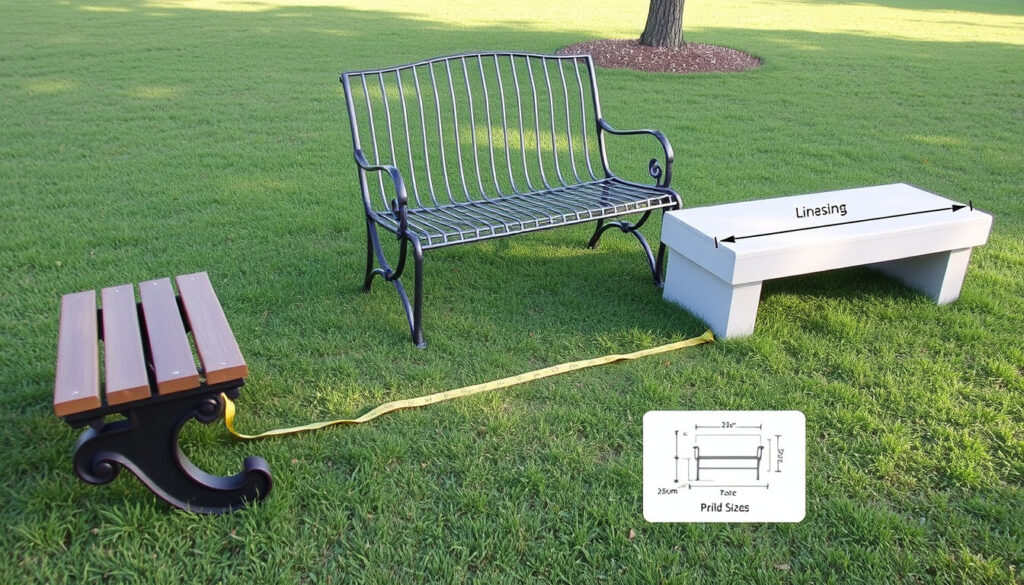
Seating Bench Guide: Types, Sizes & Terminology
Few pieces of furniture pull double duty quite like a bench—you sit on one, you stash stuff under it, you might even eat dinner off it. But when you start shopping, the terminology can get murky: banquette, pew, settle, storage bench. This guide untangles the names, walks through standard dimensions, and maps out the main types so you know exactly what you’re looking at (and sitting on).
Standard seat height: 18 in (45 cm) ·
Standard depth: 15–18 in (38–46 cm) ·
Typical length (2-3 people): 36–72 in (91–183 cm) ·
Common materials: Wood, metal, upholstered, wicker ·
Weight capacity per seat: 250–300 lbs (113–136 kg)
Quick snapshot
- Standard bench seat height is 18 inches (Wabash Valley (outdoor furniture manufacturer))
- Bench seat depth commonly ranges from 15 to 20 inches (Groens Fine Furniture (furniture retailer))
- Dining benches typically sit 18–20 inches from floor to seat (DutchCrafters (Amish furniture specialist))
- Exact origin of “banquette” – likely French, but not certain
- Custom bench dimensions vary widely by manufacturer and application
- Standard dimension guides have been published by furniture specialists as recently as 2026 (Slone Brothers (furniture retailer))
- Hospitality banquette seating is trending with lengths of 1200–1600 mm for 2–3 people (Sw Upholstery (hospitality seating specialist))
Five key dimensions, one pattern: the industry has converged on a narrow range for comfort, but the exact numbers shift depending on whether the bench is for dining, lounging, or outdoor use.
The table below distills the core measurements every buyer should know.
| Dimension | Standard value | Source |
|---|---|---|
| Standard seat height | 18 in (45 cm) | Wabash Valley (outdoor furniture manufacturer) |
| Standard depth | 15–18 in (38–46 cm) | Wabash Valley |
| Typical length (2-3 people) | 36–72 in (91–183 cm) | Dimensions.com (measurement reference) |
| Common materials | Wood, metal, upholstered, wicker | Dimensions.com |
| Weight capacity per seat | 250–300 lbs (113–136 kg) | Industry consensus from multiple retailers |
The implication: these five rows cover the fundamentals, but real-world fit depends on how each measurement interacts with your table height and room layout.
What is bench seating?
Bench seating is essentially a long, narrow seat designed to accommodate two or more people side by side. Unlike individual chairs, a bench offers a continuous surface, making it a natural fit for dining tables, kitchen islands, entryways, and public spaces like parks or train stations. The earliest benches were simple wooden planks, and that core idea still defines the category today.
Most benches fall into one of two camps: freestanding or built-in. Freestanding benches can be moved around and often double as extra seating for gatherings. Built-in benches, sometimes called banquettes, are fixed against a wall or into a corner and are commonly found in restaurants and modern kitchens. According to Dimensions.com (an authoritative measurement database), the bench is defined simply as “a long seat for multiple people.” That broad definition covers everything from a rustic park plank to a cushioned upholstered piece.
The pattern: when you say “bench,” you’re really describing a format, not a single product. The variety in materials, backrests, and storage options can make two benches look completely different, even though they share the same basic seating function.
What is bench seating called?
The terminology around bench seating can trip up shoppers. While “bench” is the universal term, specific contexts bring in alternative names. A built-in bench in a dining nook is often called a banquette. In churches, the long wooden seating is typically referred to as a pew. In British English, a wooden bench with a high, panelled back is a settle.
Countryside Amish Furniture (furniture retailer) notes that banquette seating shares its dimensions with bench seating but is usually upholstered and built into a space. The word “banquette” likely entered English from French, where it originally meant a small bench or a raised platform. Blue Roof Cabin (home design blog) offers banquette guidance that treats it as a distinct seating category, often paired with a dining table for a cosy, space-saving layout.
The pattern: if it’s built-in and upholstered, it’s a banquette. If it’s a fixed row of seats in a public building, it’s a pew. Everything else is just a bench—but knowing the right term helps when searching for the specific style.
What are the different types of bench seating?
Benches come in many flavours, but the main types fall into clear categories based on use and features. We’ll break down the six most common.
Storage benches
- Include a lift-top compartment, drawers, or cubbies underneath the seat
- Common in entryways for shoe storage and in bedrooms for blankets
- Dimensions follow standard bench sizes but often have deeper seat depth (up to 20 in) to accommodate the storage mechanism (Tip Top Furniture (furniture retailer guide))
Outdoor benches
- Built from weather-resistant materials: teak, cedar powder-coated metal, or all-weather wicker
- Teak is especially popular for its natural oils that resist rot (Wabash Valley)
- Seat height is often slightly higher (18–19 in) to accommodate thicker cushions
Kitchen/dining benches
- Used with standard dining tables; should sit about 12 inches lower than the tabletop for legroom (DutchCrafters)
- Backless benches save space; benches with a back offer more lumbar support
- Seat depth is typically 16–18 inches for upright dining
Upholstered benches
- Padded seat with fabric or leather covering; often used in living rooms or as seating at a vanity
- Depth can be wider (up to 20 inches) for a lounging experience (Corn Upholstery (upholstery specialist))
- DIY cleaning must account for fabric care
Backless benches
- Minimalist design; slides under a table when not in use
- Common in dining and commercial settings for efficient space use
Benches with back
- Adds comfort for longer sitting periods; often found in outdoor patios and entryways
- Back height can range from 12 to 24 inches
The catch: the line between types isn’t sharp. A dining bench can also have storage, and an outdoor bench might be upholstered with weather-proof foam. The key is to match the type to the room’s needs: storage for clutter, outdoor for weather exposure, upholstered for comfort.
Backless benches save visual space and slide under tables easily, but they sacrifice lumbar support for longer sits. Buyers who host long dinners should lean toward benches with backrests.
What size is a seating bench?
Bench dimensions are surprisingly consistent across the industry, but small variations matter for comfort. Here’s what the guides agree on.
Standard bench seat height
- Ranges from 18 to 19 inches from floor to seat (Wabash Valley)
- Angi (home services platform) gives the same 18-inch height for built-in bench seating in kitchens
Standard depth
- General guidance: 15 to 20 inches (Slone Brothers (furniture retailer))
- Dining benches: 15–18 inches for upright posture (Tip Top Furniture)
- Lounge-style banquettes: 22–24 inches (Blue Roof Cabin)
Length range
- 36 to 72 inches to seat 2–3 people comfortably
- Hospitality banquettes: 1200–1600 mm (approx 47–63 in) per 2–3 seats (Sw Upholstery)
Why this matters: if you’re replacing chairs with a bench, you need to measure not just the bench but also table clearance. A bench that’s too deep can make getting in and out uncomfortable.
What is a seating bench with storage?
A storage bench combines a seat with a hidden compartment underneath. It’s a staple in entryways for shoe storage, in bedrooms for extra linens, and in mudrooms for outdoor gear. The storage mechanism typically takes one of three forms:
- Lift-top – the entire seat hinges up to reveal a deep bin.
- Drawers – pull-out drawers accessible from the front.
- Cubbies – open or lidded compartments under the seat.
Storage benches follow standard seat heights (18–19 in) but often have a deeper seat (up to 20 in) to accommodate the storage cavity. Groens Fine Furniture notes that industry standards have long settled on a bench seat depth between 15 and 20 inches, and storage models tend to lean toward the deeper end. For buyers, the trade-off is convenience versus aesthetics: storage can add visual bulk, but it eliminates the need for a separate chest or cabinet.
For anyone in a small apartment, a storage bench is essentially a seating + storage unit in one piece of furniture. It doesn’t replace a full closet, but it can absorb the everyday clutter that otherwise ends up on the floor.
What is an outdoor seating bench?
Outdoor benches are designed to withstand rain, sun, and temperature swings. The material choice is the most critical factor. Teak is widely regarded as the gold standard because of its natural oils that resist moisture and insects. Cedar and pressure-treated pine are lighter on the budget but require periodic sealing. Powder-coated aluminium or steel frames resist rust, while all-weather wicker (resin-based) mimics the look of natural rattan without the rot.
Wabash Valley, a manufacturer of outdoor furniture, emphasises that standard bench dimensions hold for outdoor benches too—18–19 inch seat height, 15–20 inch depth. Some outdoor benches include built-in storage for cushions, but that’s less common. The main performance metric is UV and water resistance: look for UV-stabilised materials and drain holes in the seat if the bench will stay uncovered.
The pattern: outdoor benches prioritise durability over comfort by default. If you plan to sit for more than 30 minutes, plan to add cushions that you can store when not in use.
“Teak is a popular choice for its durability and natural oils, and outdoor benches are designed to withstand rain, sun, and temperature changes.”
— Wabash Valley (outdoor furniture manufacturer)
“Most dining benches are between 18 and 20 inches from floor to seat, and they sit about 12 inches lower than a standard tabletop.”
For an Australian garden, teak outdoor benches hold up well to sun—but any cushion needs to be stored indoors or covered, because even “weather-proof” fabrics fade after two seasons of UV exposure.
Related reading: Bed Bath N’ Table Guide · Caravan and Camping Sales in Ireland
For those seeking more detailed definitions of bench types, this companion guide detailed definitions of bench types breaks down the terminology even further.
Frequently asked questions
What is the difference between a bench and a banquette?
A bench is typically freestanding and backless, while a banquette is built-in, often upholstered, and has a back. Banquette seating is more common in dining nooks and restaurants.
How do I clean an upholstered bench?
Check the care tag first. Most fabric benches can be spot-cleaned with mild soap and water. For leather, use a dedicated leather cleaner. Vacuum regularly to remove dust and crumbs.
Can I use a bench seat as a coffee table?
Yes—a low, wide bench can double as a coffee table. Look for a height of 16–18 inches and a sturdy surface that can hold drinks and books.
Are bench seats good for small spaces?
Absolutely. A single bench can seat two to three people where chairs would require more floor space. Backless benches slide under tables and free up the room visually.
What is the best wood for an outdoor bench?
Teak is the top choice for longevity. Cedar and acacia are good mid-range options. Always seal softwoods to prevent warping and rot.
How to secure a bench to the floor?
For built-in benches, use L-brackets anchored into floor studs. For freestanding benches, rubber foot pads can prevent sliding on hardwood floors.
More related posts
 Caravan and Camping Sales in Ireland: Complete Guide
 Kate Winslet: Her Marriages, Children, and DiCaprio Bond
 Felicity Ward: Biography, Career, Marriage, and Where She Lives
 James Duckworth: ATP Ranking, Bio, Age, Height, Net Worth
 Jessica Williams: Career, Relationships, and Biography
 Glenn Shorrock Health Rumors, Wife, and Little River Band Songs
 Jhené Aiko: Ethnicity, Kids, Big Sean & Mental Health
 Leslie Mann: Biography, Age, Husband, Movies, and More
