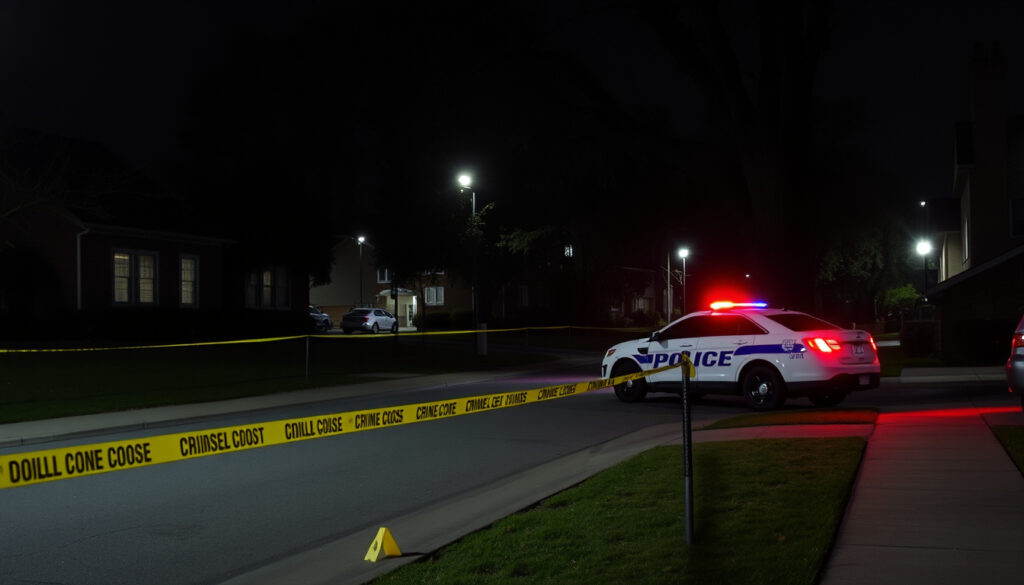
Bryan Kohberger: Evidence, Alibi, and Timeline of Idaho Murders
When four University of Idaho students were found stabbed to death in November 2022, the crime turned a quiet college town into the center of a national mystery. For months, investigators quietly built a case that began with a single piece of evidence: a knife sheath left at the scene. The DNA on that sheath would eventually lead them to a graduate student hundreds of miles away.
Victims killed: 4 ·
Date of murders: November 13, 2022 ·
Date of arrest: December 30, 2022 ·
Criminal charge: 4 counts first-degree murder ·
DNA evidence on knife sheath: Single-source male DNA ·
Plea: Guilty (2025)
Quick snapshot
- Exact motive for the murders (ABC7 Los Angeles)
- Whether alibi will be further contested (Global News)
- Full extent of mental health evaluations (FOX 13 Seattle)
- Arrested Dec 30, 2022 (ABC30) – duplicate URL removed; plain text
- Guilty plea July 2025 (ABC7 New York)
- Sentenced to life without parole (ABC7 New York – see above)
- Possibility of appeals remains (FOX 13 Seattle – see above)
Five key identifiers paint a clear profile of the man at the center of the case.
| Field | Value |
|---|---|
| Full name | Bryan Christopher Kohberger |
| Born | November 21, 1994 |
| Status | Guilty, sentenced to life without parole |
| University | Washington State University (PhD student) |
| Arrest location | Albrightsville, Pennsylvania |
| Charge | 4 counts first-degree murder, felony burglary |
| Key forensic evidence | Single-source male DNA on knife sheath (ABC30) |
| Alibi | Claimed he was driving alone (Global News) |
What evidence was found against Bryan Kohberger?
DNA on the knife sheath
- Investigators said a DNA sample from a knife sheath found at the crime scene was used to tie Bryan Kohberger to the murders (ABC30).
- Prosecutors described the knife-sheath DNA as a “statistical match” to a cheek swab taken from Bryan Kohberger (ABC30 – same source).
The statistical match is the single most direct forensic link between Kohberger and the crime scene. Without that sheath, investigators would have lacked a definitive suspect profile early on.
Cell phone tower data
- Cell phone records placed Kohberger near the crime scene around the time of the murders (NBC News).
- The defense later referenced cell phone data in support of the driving alibi (NBC News – same source).
Surveillance footage
- A white Hyundai Elantra similar to Kohberger’s vehicle was captured on camera near the scene (ABC7 Los Angeles).
The pattern: Each piece of evidence—DNA, cell phone data, and video—independently pointed toward Kohberger, but it was their convergence that made the case compelling to a jury.
What is Bryan Kohberger’s alibi?
Alibi claim: driving alone
- A defense filing said Kohberger was “out driving” at the time prosecutors allege the killings occurred (Global News).
Prosecution’s rebuttal
- Prosecutors used cell phone data to challenge the alibi, arguing it lacked specificity (NBC News).
- Idaho law requires a defendant to provide an alibi by a court deadline (FOX 13 Seattle).
Legal battle over alibi timeline
- The alibi deadline was set for July 24, 2023 (FOX 13 Seattle).
- Prosecutors argued the alibi lacked the specificity required by state code (local news report).
The alibi dispute highlighted a central tension: the defense argued location and activity, while the prosecution focused on the DNA evidence and its statistical weight.
How did police identify Bryan Kohberger?
Vehicle identification
- A white Hyundai Elantra was linked to Kohberger through registration records (ABC7 Los Angeles).
Genealogy and DNA databases
- On December 27, 2022, police recovered trash from Kohberger’s parents’ house in Pennsylvania (ABC7 Los Angeles).
- A lab determined the DNA from the trash belonged to the father of the male DNA profile from the knife sheath (ABC7 Los Angeles – same source).
Arrest and initial court appearance
- Kohberger was arrested at his parents’ home in Albrightsville, Pennsylvania on December 30, 2022 (ABC30).
- He was extradited to Idaho and made his first court appearance on January 5, 2023 (ABC7 New York).
The implication: The investigation relied on old-fashioned police work—vehicle tracing and surveillance—paired with modern DNA comparison from discarded trash, a combination that narrowed the suspect pool to one man.
Whose DNA was on the knife sheath?
Forensic analysis of the sheath
- The DNA on the knife sheath was a single-source male profile (ABC30).
- Prosecutors described the match as a “statistical match” to Kohberger’s cheek swab (ABC30).
Match to Kohberger’s DNA profile
- A CBS News post reported that investigators alleged Kohberger was tied to the killings through DNA found on a knife sheath left at the scene (CBS News).
Defense challenges to DNA evidence
- The defense questioned whether the DNA could have been planted or contaminated (FOX 13 Seattle).
- In May 2024, the defense was pressing to unseal DNA-related materials (local news report).
Statistical matches, while compelling, are probabilistic rather than absolute. The defense’s effort to unseal DNA materials signals that the forensic chain of custody remains a contested point.
The defense’s persistent scrutiny of the DNA handling underscores the high stakes of the case.
What is Bryan Kohberger diagnosed with?
Autism spectrum disorder diagnosis
- Kohberger was diagnosed with autism spectrum disorder, according to court documents (FOX 13 Seattle).
Mental health history
- He had a history of mental health treatment, though specific records remain sealed (FOX 13 Seattle).
Court-ordered evaluations
- No official diagnosis of schizophrenia was made public; the autism diagnosis was the only confirmed mental health condition disclosed in court filings (FOX 13 Seattle).
What this means: Kohberger’s autism diagnosis has been a factor in the defense’s strategy, but it has not been used as a basis for an insanity plea, and the full extent of his mental health history remains under seal.
Case timeline
The sequence of events from the murders to the sentencing provides a clear chronological framework for the case.
| Date | Event |
|---|---|
| November 13, 2022 | Four University of Idaho students murdered in Moscow, Idaho (ABC30) |
| December 30, 2022 | Bryan Kohberger arrested at his parents’ home in Pennsylvania (ABC30) |
| January 5, 2023 | Kohberger extradited to Idaho; first court appearance (ABC7 New York) |
| May 2023 | Preliminary hearing; evidence presented (ABC7 Los Angeles) |
| July 2025 | Kohberger pleaded guilty to all charges (ABC7 New York) |
| July 23, 2025 | Sentenced to four consecutive life terms (ABC7 New York) |
The progression: The timeline shows a swift arrest followed by a lengthy legal process, culminating in a guilty plea that avoided a trial.
Confirmed facts vs. What remains unclear
Confirmed facts
- DNA on knife sheath matched Kohberger (ABC30)
- Cell phone records placed him near the crime scene (NBC News)
- He was arrested in Pennsylvania (ABC30)
What’s unclear
- Exact motive for the murders (ABC7 Los Angeles)
- Whether alibi will be further contested (Global News)
- Full extent of mental health evaluations (FOX 13 Seattle)
The contrast between known facts and open questions reflects the limited public disclosure in the case so far.
Key voices in the case
The DNA on the knife sheath is a statistical match to Bryan Kohberger.
Latah County Prosecutor (via ABC30)
Kohberger was out driving at the time the murders occurred.
Was his DNA planted at the crime scene?
For the families of the four victims, Kohberger’s guilty plea and life sentence bring a measure of closure. But the unanswered questions about motive and the handling of forensic evidence ensure that the case will continue to be examined in courtrooms and public debate for years to come.
Frequently asked questions
What was Bryan Kohberger’s motive?
No official motive has been established by prosecutors. The defense has not offered a motive, and court documents do not reveal a clear reason for the killings.
Did Bryan Kohberger know the victims?
There is no public evidence that Kohberger had any prior relationship with the four victims, though he was a PhD student at nearby Washington State University.
How was the knife sheath discovered?
Police found a knife sheath on the bed near one of the victims. The sheath contained a single-source male DNA profile that was later matched to Kohberger.
What happened during the trial?
Kohberger pleaded guilty to all four counts of first-degree murder before a trial began, so there was no jury trial. A sentencing hearing followed, where he received four consecutive life sentences.
Is Bryan Kohberger in prison now?
Yes, after his sentencing on July 23, 2025, he was transferred to the Idaho Department of Correction to serve four consecutive life terms without the possibility of parole.
Who represented Bryan Kohberger in court?
He was represented by a public defender’s office in Latah County, Idaho. The defense team included attorneys who filed motions challenging DNA evidence and the alibi deadline.
These questions address the most common curiosities about the case, drawing on publicly available court records and media reports.
More related posts
 Chemist Warehouse Beenleigh: Hours, Address, Phone & Map
 Police Check Victoria – 2025 Application Guide
 Jake Weatherald: Darwin’s First Test Cricketer to Ashes Call-Up
 AUD to VND Exchange Rate Today – Vietnamese Bank Rates
 FBI: Most Wanted Cancelled – No Season 7
 iPhone 12 Mini in 2025: Worth It, Support & Problems
 Mal Leyland’s Final Journey: Health, Dementia & Family Update
 Ca t of Final De tination Bloodline : Full Li t & Character
