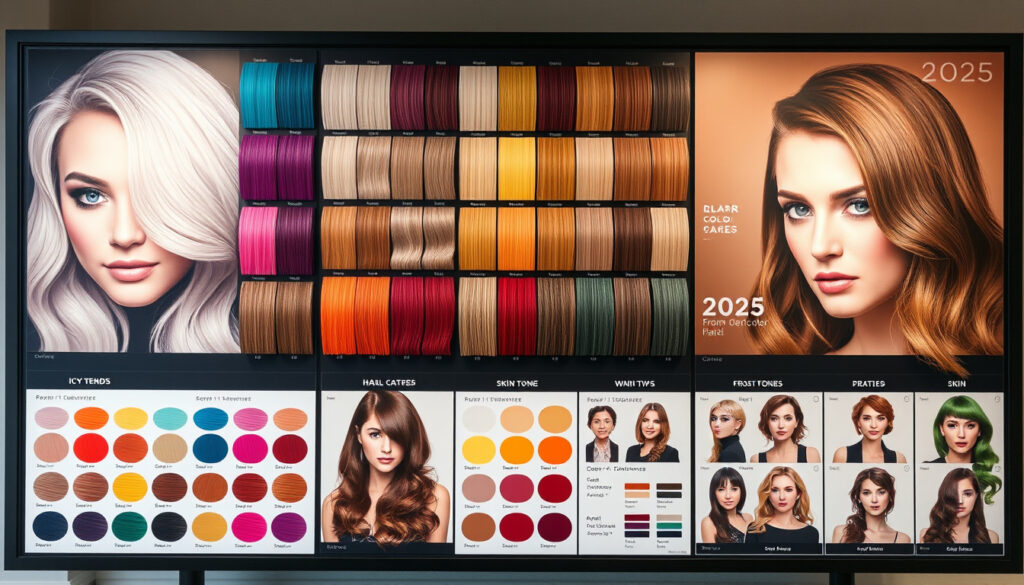
Hair Colour Ideas: Trends for 2025, Skin Tones & Age
Pinning hair colour ideas for 2025? Whether you’re after a complete refresh or just want to cover grey without the guesswork, there’s more to consider than finding the right shade. From colour-matched highlights for mature skin to gentle options safe for chemotherapy patients, here’s what actually works—and what to skip.
Top 2025 trends: balayage, ombré, bold reds · Pinterest ideas count: 130 best inspirations · Rush Hair ideas: 35 stylish colours · L’Oréal warm tones: 14 beautiful colours
Quick snapshot
- By age 50, approximately 40% of women experience some hair loss (Michael Thomas Hair Design)
- Hair regrowth starts 3–6 months post-chemo (MyBCTeam)
- Avoid permanent dyes for 6 months after chemo ends (Cancer Research UK)
- Specific minoxidil–hair dye interaction data
- Clinical trial data on plant-based dye safety during chemo
- Hair loss begins 10–14 days after first chemo treatment (Cancer Hair Care)
- Dye hair 1 week before chemo starts for best pre-treatment coverage (Cold Cap)
- Natural dyes like henna emerge as preferred post-chemo option (NATULIQUE)
- Skin-tone matching becomes standard in professional consultations (Chicago Hair Color Salon)
Four major categories drive this space: balayage and ombré for natural dimension, bold reds for statement looks, warm caramel tones for ageing skin, and plant-based options for medical contexts. Pinterest alone hosts 130 curated inspiration boards, while Rush Hair lists 35 colours and L’Oréal features 14 warm-tone sections.
| Label | Value |
|---|---|
| Pinterest inspirations | 130 ideas |
| Rush 2025 trends | 35 colours |
| Wella focus | Trends and care |
| L’Oréal sections | Warm tones, browns |
| Women with hair loss by age 50 | 40% |
| Post-chemo dye avoidance | 6 months |
| Regrowth window post-chemo | 3–6 months |
What color hair makes you look younger?
The answer depends heavily on your skin tone and hair condition. Colour analysis considers skin undertone, hair condition, and eye colour simultaneously—get the balance right and the result reads as years younger, not just different.
Darker vs lighter shades
Cool skin tones—those with pink or blue undertones—pair best with ash blonde, bright platinum, burgundy, chocolate brown, blue-black, or rose gold. Warm skin tones, which have yellow or golden undertones, suit honey blonde, golden brown, copper, light auburn, or mahogany.
The catch: by age 50, approximately 40% of women experience some degree of hair loss. Darker colours like chocolate brown add dimension that masks thinning, while lighter shades can sometimes emphasise sparse areas rather than camouflage them.
Hairstyles for youthfulness
Warm tones—golden, honey, caramel—brighten ageing skin by matching your natural warmth that often intensifies after 50. Low-contrast blonde blends, mushroom brown, and pearl blonde work particularly well for women over 60 because they soften facial lines without creating stark colour boundaries.
Darker colours add dimension to thinning hair in mature women, while strategically placed highlights can create movement that reads as volume. A single-tone colour often falls flat on ageing hair.
Should you go darker or lighter with hair color as you age?
The rule isn’t universal—it hinges on whether you want to soften features or add definition, and your current skin tone.
Age-specific recommendations
Women over 50 with thinning hair benefit from colours that create depth without high contrast. Mushroom brown—a muted taupe shade—and low-contrast blonde blends achieve this naturally. Avoid going dramatically darker than your natural colour if your hair is fine; the regrowth line becomes too visible.
If your goal is to look younger, warm tones like honey and caramel brighten the face more effectively than ashy shades, which can wash out mature skin. The trade-off: warm tones require more maintenance as roots show faster.
Salon expert advice
Colour placement matters as much as shade choice. Balayage—hand-painted highlights—creates a natural gradient that grows out gracefully, reducing salon visits and limiting chemical exposure. Highlights concentrated around the face brighten the complexion, while subtle lowlights add the appearance of density.
For mature women, low-contrast blonde blends and mushroom brown soften facial lines without creating stark colour lines as regrowth appears. The key is matching your current undertone rather than fighting it.
Can I dye my hair if I’m using minoxidil?
Minoxidil is a topical hair regrowth treatment that doesn’t directly interact with hair dye chemistry, but the combination requires some precautions. No clinical studies document specific minoxidil–hair dye interactions, though dermatologists generally recommend applying each product separately and giving adequate drying time between them.
Side effects and interactions
The active ingredient in minoxidil—typically a 2% or 5% topical solution—is absorbed through the scalp, not the hair shaft. Hair dye sits on the hair, so chemical contact is limited. However, if your scalp is irritated from minoxidil use, introducing dye chemicals could increase sensitivity.
Avoid applying minoxidil immediately before a colour treatment. Give the solution time to absorb and the scalp to settle. If you’re using minoxidil foam, wait at least 2–4 hours before any scalp-colour contact.
Who should avoid it
People with known allergies to minoxidil’s inactive ingredients—or to PPD in hair dyes—should patch test both products separately before combining them. PPD (paraphenylenediamine) is the compound in many dark hair dyes that causes allergic reactions, and reactions can be severe.
There’s no documented minoxidil–hair dye contraindication, but irritated scalps and allergen exposure warrant caution. Patch testing protects against the real risk: PPD reactions that can cause anaphylaxis in sensitive individuals.
What is the best hair dye for chemo patients?
This question has two distinct answers depending on timing: during active treatment versus after recovery.
Post-chemo safety
Oncologists are unanimous: oxidation hair colouring must be banned during chemotherapy and for several months after it ends. Chemotherapy weakens hair follicles and can cause hyperpigmentation or hypopigmentation—hair that grows back darker or lighter than before. Traditional dyes risk damaging already fragile regrowth.
Wait at least 6 months after chemotherapy ends before using permanent or semi-permanent dyes. When you’re ready, henna and vegetable-based dyes are the gentler options. Cancer Research UK specifically recommends henna for post-chemo colouring because it lacks ammonia and PPD.
Hair regrowth starts 3–6 months post-chemo, but the texture often changes. You may develop “chemo-curls” or notice your hair grows in straighter. Wait until hair feels strong before colouring—and until it reaches at least an inch in length.
During treatment risks
During active chemotherapy, avoid all permanent, semi-permanent, and oxidation dyes. Hair loss typically begins 10–14 days after the first treatment, and follicles are at their most vulnerable. PPD in conventional dyes can cause severe allergic reactions when the immune system is compromised.
If you want colour during treatment, temporary options—mousses, sprays, root touch-up products—blend regrowth without penetrating the hair shaft. These wash out within days and carry none of the chemical risks of traditional dyes.
Dye hair about a week before chemotherapy starts, closer to your natural colour. This gives you a baseline that masks new growth during treatment. During scalp cooling—which some patients use to reduce hair loss—avoid all dyes because the scalp is particularly reactive.
What hair color goes best with rosacea?
Rosacea causes facial redness that hair colour either amplifies or neutralises. The goal is choosing tones that complement your skin without adding warmth to already flushed areas.
Shade vs tone matching
Cool-toned, muted colours reduce the appearance of facial redness. Mushroom brown—an ashy, neutral brown—works particularly well because it doesn’t introduce warm tones that contrast with the redness. Ash blonde, cool medium brown, and neutral blonde shades achieve similar effects.
Avoid copper, red, orange, and golden blonde tones if rosacea is pronounced. These warm hues reflect onto the face and make redness more visible. The contrast creates a visual conflict that draws attention to the affected areas.
Skin tone considerations
Beyond rosacea specifically, match your colour to your undertone. Cool skin tones pair with cool hair colours; warm skin tones pair with warm colours. When rosacea introduces red undertones to the complexion, leaning slightly cool in your hair colour helps balance the overall effect.
Mushroom brown, ash blonde, and cool medium brown neutralise facial redness without clashing. The trade-off: these muted shades require precise formulation—too cool reads as grey, too warm defeats the purpose. A professional colourist’s trained eye makes the difference.
Confirmed facts
- Minoxidil topical side effects documented by Mayo Clinic
- Hair loss begins 10–14 days after first chemo treatment
- Avoid permanent dyes for 6 months post-chemo
- Cool tones (ash blonde, burgundy) suit cool skin; warm tones suit warm skin
- PPD can cause anaphylaxis in sensitive individuals
Unverified claims
- Exact JLo product and brand details for hair loss regimen
- Specific minoxidil–hair dye interaction data
- Clinical trial data on plant-based dye safety during chemo
“It is best to avoid some treatments for around 6 months after finishing chemotherapy.”
— Cancer Research UK (Cancer Charity)
“By the age of 50 approximately 40% of women will suffer at least some degree of hair loss.”
— Michael Thomas Hair Design (Salon Expert)
“Oncologists are unanimous: it is imperative to ban oxidation hair coloring during chemotherapy, as well as for several months after it ends.”
— Hairborist (Hair Care Expert)
Related reading: Billie Eilish Met Gala looks · Linda Evangelista now
In 2025 hair trends, light brown hair shades strike a versatile balance, flattering skin tones from fair to deep with fresh dye ideas.
Frequently asked questions
What are hair colour ideas for girls?
Young people typically experiment with fashion colours—pastel pinks, blues, purples—or natural-looking highlights. Semi-permanent dyes work well for experimentation because they fade within weeks without long-term commitment.
What are hair colour ideas for brown skin?
Warm tones complement brown skin beautifully: caramel, honey blonde, copper, and mahogany add warmth that enhances the complexion. Cool tones like burgundy, ash brown, and black create striking contrast. Balayage highlights around the face brighten naturally.
What are hair colour ideas for men?
Men’s colour options tend toward subtle enhancement rather than dramatic change. Grey blending—reducing the contrast between grey and pigmented hair—creates a natural, maintained look. Deep brown or auburn tints restore depth without looking dyed.
What are hair colour highlights ideas?
Balayage offers the most natural look, with colour hand-painted to follow hair movement. Babylights—fine, subtle highlights—add dimension without obvious patterning. Face-framing highlights brighten the complexion; lowlights add density to thinning hair.
What are hair colour ideas for Indian skin?
Indian skin typically has warm or neutral undertones that pair well with golden brown, caramel, honey, auburn, and burgundy shades. Avoid ashy or cool-toned blondes unless you have a cool complexion undertone. Balayage works particularly well for naturally dark hair.
How can hair make you look younger?
Colour placement creates the illusion of volume and movement. Highlights around the face brighten the complexion. Low-contrast tones soften facial lines. Warm tones (honey, caramel) counteract the flatness that often accompanies ageing hair. Strategic dimension adds visual density to thinning areas.
What did Jennifer Lopez use for hair loss?
Reports indicate Jennifer Lopez has used minoxidil for hair regrowth, though specific product details and formulations aren’t publicly confirmed. Minoxidil is an FDA-approved topical treatment for hereditary hair loss and is widely available in 2% and 5% concentrations.
More related posts
 Antonia Thomas: Biography, Career, The Good Doctor Exit
 Playboi Carti: Biography, Health & LGBTQ Rumors, Dublin 2026
 Justin Baldoni: Controversy, Net Worth, Wife & Ethnicity
 Jack Howarth: Two Lives, One Name – Actor vs Rugby Player
 Doctors Near Me – Top Tools and Tips
 Les Wexner: Retail Billionaire to Epstein Scandal Biography
 Gold Price Australia – Live Rates and Buying Guide
 Ethel Kennedy: Life, Relationships, and Legacy
