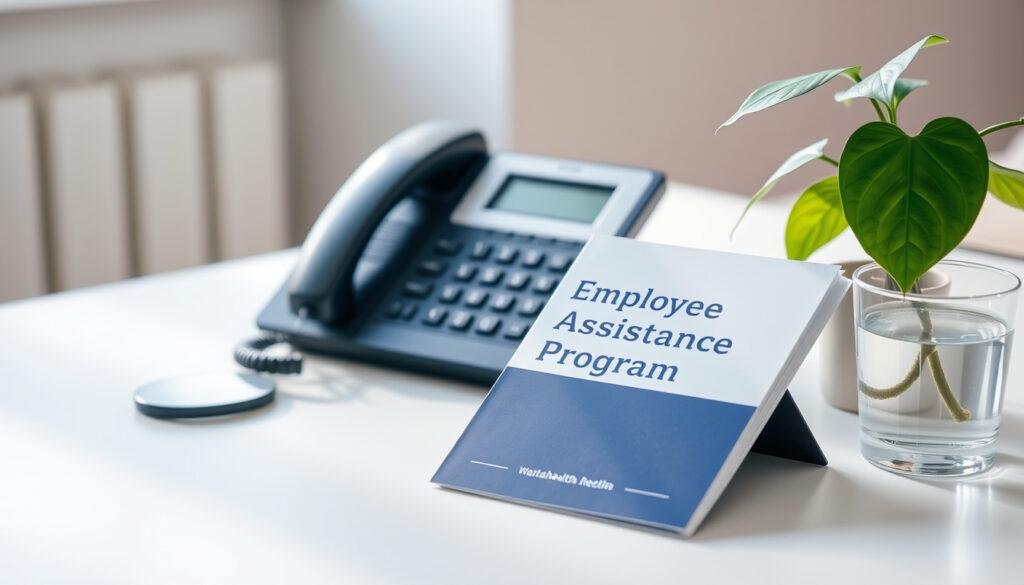
EAP: Benefits, Limitations & How to Access in Ireland
Anyone who’s tried to balance a demanding job with personal pressures knows the feeling of needing somewhere to turn. Employment Assistance Programs (EAPs) are designed to be that somewhere for Irish workers, offering confidential counselling and support through providers like the HSE and the Department of Education.
HSE EAP availability: Monday to Friday, 8am to 8pm ·
Confidential counselling: Free for all HSE staff ·
Department of Education EAS freephone: 1800 411 057 ·
Vhi EAP coverage: Tools and support for work-life balance
Quick snapshot
- Confidential workplace support program (HSE EAP Standards)
- Counselling, legal, financial services (WHO Ireland profile)
- Free to employees (HSE Health & Wellbeing)
- HSE — for all its staff (HSE.ie)
- Department of Education — via EAS freephone (Gov.ie EAS)
- Private employers — through Vhi, Cornmarket, etc. (Cornmarket blog)
- Phone, online, or in-person (WHO Ireland profile)
- Self-referral or manager referral (Cornmarket blog)
- 24/7 helpline available with some providers (Citizens Information EAP)
- Pros: Free, confidential, early help (HSE EAP Standards)
- Cons: Limited sessions, not for severe issues (Citizens Information EAP)
The table below gathers key facts about Employment Assistance Programmes in Ireland, from session limits to confidentiality rules.
| Fact | Value |
|---|---|
| HSE EAP hours | Mon-Fri 8am-8pm |
| Department of Education EAS freephone | 1800 411 057 |
| Typical EAP session limit | 3-8 sessions per issue |
| Confidentiality | Employer not informed of usage |
| HSE EAP eligibility | All HSE staff, free of charge |
| Self-referral allowed | Yes, without permission needed |
| Services included | Counselling, financial advice, legal support |
| Critical incident support | Individual and group stress management |
| Manager consultation | Included as standard |
What is the employee assistance program?
How does an EAP work?
- HSE EAP Standards describe it as a confidential workplace benefit — employees call a dedicated number, speak with a trained counsellor, and are offered short-term, solution-focused support.
- Sessions are typically phone-based or face-to-face, with referral to specialist services if needed (WHO Ireland primary health care profile).
- Most EAPs operate independently from the employer — usage data never reaches HR (Cornmarket blog).
What services are typically offered in an EAP?
- Counselling for stress, anxiety, relationship problems, and bereavement (HSE EAP Standards).
- Financial guidance and legal advice on issues like debt, tenancy, and family law (Citizens Information EAP).
- Psychoeducation workshops — the HSE EAP runs sessions on stress management, resilience, and wellbeing at work (HSE EAP Standards).
- Critical incident stress management — immediate individual and group support after traumatic events (HSE EAP Standards).
Why this matters — HSE EAP StandardsThe HSE EAP is not a one-call fix — it bundles counselling, crisis response, and manager consultation. For the 100,000-plus HSE employees, this means access to a tiered support system rather than a single helpline.
What this means: EAPs offer breadth, not depth — they cover multiple life domains efficiently, but each domain gets limited time.
What is the purpose of the employee assistance program?
Why do employers offer EAPs?
- Employers use EAPs to support employee wellbeing and mental health, reducing the impact of personal problems on job performance (WHO Ireland profile).
- The HSE frames its EAP as a tool to help staff manage psychosocial issues that “may affect job performance or home life” (HSE EAP Standards).
- Reducing absenteeism and improving productivity are common business justifications (HSA Workplace Health Strategy).
What problems does an EAP address?
- Personal issues: debt, relationship breakdown, caring responsibilities (Citizens Information EAP).
- Work-related stress: burnout, conflict with colleagues, job insecurity (HSE Work-Related Stress Poster).
- Substance misuse and addiction — some EAPs offer referral to specialised treatment (Drugs.ie service directory).
- EAPs catch problems early, before they escalate into more serious mental health conditions (Mental Health Reform EAP briefing).
The trade-off — Cornmarket blogEmployers fund EAPs to protect productivity — but employees get genuinely free, private support. That dual purpose creates tension: the service must remain independent to earn trust, yet it still answers to the employer who pays the bill.
The pattern: EAPs exist at the intersection of employee welfare and employer ROI — a hybrid model that works only when confidentiality is ironclad.
What is the HSE Employment Assistance Program?
Who is eligible for the HSE EAP?
- All HSE employees are eligible, free of charge (HSE Health & Wellbeing).
- No referral from a manager or GP is required — self-referral is accepted at any time (WHO Ireland profile).
- The service is also open to some non-HSE health sector workers depending on local agreements (Cornmarket blog).
How to access the HSE EAP?
- Call the HSE EAP helpline: 0818 327 327 (HSE Work-Related Stress Poster).
- Online referral via the HSE employee portal (HSE.ie).
- The service operates Monday to Friday, 8am to 8pm (Cornmarket blog).
The catch — HSE Work-Related Stress PosterThe HSE EAP phone line closes at 8pm and is not a 24/7 service. For HSE staff working night shifts or weekend rosters, the support window narrows considerably.
What this means: The HSE EAP is generous in principle — free, confidential, self-referral — but its operating hours create a gap for the shift workers who arguably need it most.
What are the limitations of an EAP?
Are EAPs effective?
- Most EAPs offer between 3 and 8 sessions per issue — enough for brief intervention, not ongoing therapy (Citizens Information EAP).
- Effectiveness depends heavily on the quality and experience of the counsellor, which varies between providers (Mental Health Reform EAP briefing).
- Short-term counselling models (CBT, solution-focused therapy) dominate — helpful for acute issues, less so for complex trauma (PSEC EAP evaluation).
Common criticisms of EAPs
- Session limits: once the allowance is used, employees either pay privately or lose support (Citizens Information EAP).
- Confidentiality concerns persist — despite guarantees, some workers fear their employer could be tipped off (Mental Health Reform EAP briefing).
- Quality varies: a provider panels counsellors with wildly different experience levels (IAPA (Irish Association of Psychological Therapies)).
- EAPs are not designed for serious mental illness — they are triage, not treatment (HSE Mental Health Services).
The upshot — Citizens InformationEAPs are excellent for a bruised knee, not a broken leg — they handle work stress and mild anxiety well, but someone with chronic depression will hit the session limit before they get traction.
The trade-off: EAPs trade depth for breadth — accessible, affordable, but capped. For serious conditions, they function as a gateway, not a home.
What are the benefits of an employee assistance programme (EAP)?
Benefits for employees
- Free access to professional counselling that would cost €60-€100 per session privately (IAPA therapist directory).
- Completely confidential — employer never learns who called or why (Cornmarket blog).
- Early intervention prevents small problems from becoming large ones (Mental Health Reform EAP briefing).
- Convenient format — phone, video, or in-person sessions fit around the working day (WHO Ireland profile).
Benefits for employers
- Reduced absenteeism and presenteeism — healthier staff mean fewer sick days (HSA Workplace Health Strategy).
- Improved staff morale and retention — EAPs signal that the employer cares about wellbeing (IBEC employee relations guidance).
- Cost savings: €1 spent on EAP saves an estimated €3-€5 in reduced turnover and sick pay (CIPD EAP guidance).
- Manager support: consultation and training for dealing with distressed staff (HSE EAP Standards).
Why this matters — Mental Health ReformFor Irish employers, EAP ROI is measurable: every euro spent returns multiples in avoided costs. For employees, the value is existential — a free, private space to talk when work or life gets too heavy.
Upsides
- Free to employees — no cost barrier
- Confidential — employer not informed of usage (Cornmarket blog)
- Early intervention for mental health concerns (Mental Health Reform)
- Reduces stress and improves workplace morale (CIPD Ireland)
- Multi-domain support: counselling, legal, financial (Citizens Information)
Downsides
- Limited session count — typically 3-8 (Citizens Information)
- Not suitable for long-term or severe mental health issues (HSE Mental Health)
- Confidentiality fears — distrust persists (Mental Health Reform)
- Variable quality across different provider panels (IAPA)
- Limited hours on some provider helplines (HSE Stress Poster)
Confirmed facts vs what’s unclear
Confirmed facts
- EAPs are confidential workplace benefits (HSE EAP Standards)
- HSE EAP is free for all staff (HSE Health & Wellbeing)
- EAPs offer short-term counselling and referral services (WHO Ireland profile)
- Self-referral is possible without manager approval (Cornmarket blog)
What’s unclear
- Long-term effectiveness of EAP compared to ongoing therapy
- Actual usage rates — how many eligible employees ever call?
- Quality comparison between different Irish provider panels
- How consistently confidentiality is perceived as trustworthy by staff
Related reading: ADHD Medication: Risks, Benefits & What to Know Before Starting
gov.ie, citizensinformation.ie, intax.ie, inou.ie, gov.ie, assets.hse.ie
For a deeper look at how these services work, see this complete guide to EAP in Ireland.
Frequently asked questions
Is an EAP the same as health insurance?
No. EAPs are counselling and support services provided by your employer, not medical insurance. Health insurance covers hospital stays and GP visits. EAP covers talking therapy, legal advice, and financial guidance.
Can I use an EAP for family members?
Many EAPs extend coverage to immediate family members living in the same household. Check with your specific provider — HSE EAP, for example, may include dependents.
How many sessions does an EAP cover?
Most Irish EAPs offer between 3 and 8 sessions per issue per year, according to Citizens Information. Once the limit is reached, you may need to pay privately or seek referral.
Will my employer know I used the EAP?
No. EAPs operate under strict confidentiality. The employer receives only aggregate usage data — never individual names or reasons for calling. Cornmarket confirms the HSE EAP is “confidential and independent.”
What types of issues does an EAP help with?
Common issues include stress, anxiety, depression, relationship problems, debt, legal concerns, bereavement, workplace conflict, and substance misuse (Citizens Information).
How do I find my employer’s EAP provider?
Check your employee handbook, HR portal, or payslip. If you cannot find it, ask HR directly — they are required to tell you how to access the service.
Is EAP counselling available online?
Yes. Most providers now offer phone, video, and online chat options alongside in-person sessions (WHO Ireland profile).
For Irish workers, the choice is not whether EAPs are worth using — it is whether their employer provides one and whether the confidentiality promise holds. For the estimated 60% of public sector workers with EAP access, the smart play is to use the free sessions early, before a small problem grows. For employers, the implication is clear: invest in EAP quality and trust, or watch a low-utilisation service become a wasted line item in the wellness budget.
More related posts
 Cartier Love Ring – History, Prices and Authentication Guide
 Leon Trotsky: Revolutionary Life, Exile, and Assassination
 Sunrisers Hyderabad vs Gujarat Titans Match Scorecard – GT’s 7-Wicket IPL 2024 Win
 Salish Matter Age, Net Worth, and Biography (2025 Update)
 Gordon Ramsay: Personal Life, Health, and Net Worth
 Vasco da Gama: Biography, Voyages, and Sea Route to India
 Sam Heughan: Relationship, Net Worth, Health, and Outlander Facts
 Funny Nicknames: Goofy, Silly & Teasing Ideas
