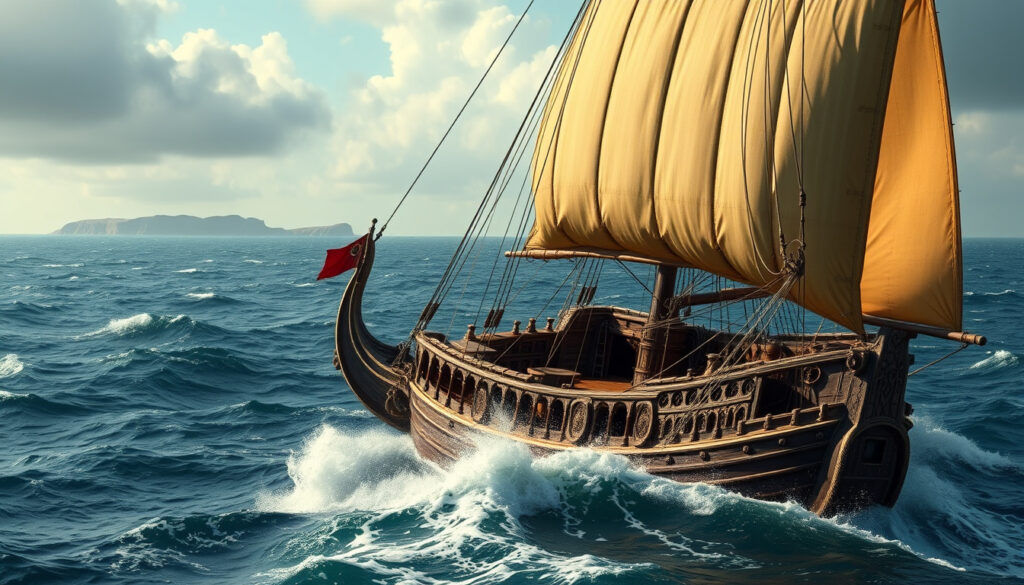
Vasco da Gama: Biography, Voyages, and Sea Route to India
Vasco da Gama’s 1498 arrival in Calicut cracked open the spice trade and ended centuries of overland monopoly. The Portuguese explorer pulled off what no European had done before: sailing around Africa’s southern tip to reach India by sea, setting the stage for European colonialism in Asia.
Born: c. 1460, Sines, Portugal ·
Died: December 24, 1524, Cochin, India ·
Nationality: Portuguese ·
Known for: First European to reach India by sea ·
First Voyage: 1497–1499 ·
Route: Around Cape of Good Hope
Quick snapshot
- First European to reach India by sea via the Cape of Good Hope (Mariners’ Museum – exploration archive)
- First voyage dates: 1497–1499 (Britannica – encyclopedic biography)
- Died December 24, 1524 in Cochin, India (Britannica)
- Exact birth year varies (c. 1460 or 1469) (Britannica)
- Precise details of early life are not fully documented (Britannica)
- Some accounts of atrocities during the second voyage are debated by historians (Britannica)
- 1497–1499: First voyage – rounds Cape of Good Hope, reaches Calicut (Britannica)
- 1502–1503: Second voyage – punitive expedition to secure trade (Britannica)
- 1524: Third voyage – appointed Viceroy, dies in Cochin (Britannica)
- His sea route fueled the rise of the Portuguese Empire in Asia (Britannica)
- Remains transferred to Jerónimos Monastery, Lisbon – a national monument (Britannica)
| Full Name | Vasco da Gama |
|---|---|
| Born | c. 1460, Sines, Portugal |
| Died | December 24, 1524, Cochin, India |
| Nationality | Portuguese |
| Occupation | Explorer, Navigator, Nobleman |
| Known For | First European sea route to India |
| First Voyage | 1497–1499 |
| Total Voyages | 3 |
| Ship Flagship | São Gabriel |
| Title | Viceroy of Portuguese India (1524) |
What is Vasco da Gama famous for?
Vasco da Gama is best remembered as the first European to sail directly from Europe to India, a feat that rewired global commerce. His 1497–1499 expedition opened a maritime highway around Africa that bypassed the expensive overland routes controlled by Venetian and Ottoman middlemen.
5 facts about Vasco da Gama
- He was born in Sines, Portugal, around 1460 (Britannica – encyclopedic biography).
- His flagship on the first voyage was the São Gabriel (Mariners’ Museum – exploration archive).
- He made three voyages to India in total (Britannica).
- He was appointed Viceroy of Portuguese India in 1524 (Britannica).
- His voyage is celebrated in the Portuguese epic Os Lusíadas by Luís de Camões.
What is the real name of Vasco?
His full name was simply Vasco da Gama. “Vasco” is a given name, and “da Gama” is a family name. No middle name or alternate title is historically recorded.
When was Vasco da Gama born?
Most sources agree on a birth year around 1460, though some suggest 1469. The exact date is unknown because parish records of the time are incomplete (Britannica).
The uncertainty around da Gama’s early years doesn’t diminish his achievement. It does, however, remind us that even the most celebrated figures of the Age of Discovery lived in an era when record-keeping was patchy – a fact that fuels ongoing scholarly debate.
What did Vasco da Gama discover in 1498?
In May 1498, da Gama anchored off the port of Calicut (now Kozhikode) on India’s Malabar Coast. He didn’t “discover” India – the subcontinent was already well known through land routes – but he was the first European to establish a direct sea link between Europe and India (Britannica).
Vasco da Gama’s route to India
His route is a classic example of strategic navigation: from Lisbon south along the West African coast, then eastward around the Cape of Good Hope, up the African east coast, and across the Indian Ocean. The entire journey covered more than 24,000 nautical miles (The Globalist – analysis of the spice race).
How many voyages did Vasco da Gama undertake?
He made three voyages: the first (1497–1499) was the historic breakthrough; the second (1502–1503) was a military show of force; the third (1524) ended with his death in Cochin (Britannica).
Da Gama’s “discovery” was both a marvel of navigation and an act of commercial invasion. The Zamorin of Calicut initially welcomed him, but tensions over trade soon erupted into conflict – a pattern that repeated across Portugal’s Asian empire.
Who came first, Columbus or Vasco da Gama?
Christopher Columbus reached the Americas in 1492, six years before da Gama set foot in India. But their voyages reflect opposite strategies: Columbus sailed westward across the Atlantic hoping to hit Asia, while da Gama intentionally went east around Africa.
Six key differences, one pattern: two monarchies pursuing the same prize (spices) through radically different geographic assumptions.
| Aspect | Christopher Columbus | Vasco da Gama |
|---|---|---|
| Sponsored by | Spain (Ferdinand & Isabella) | Portugal (King Manuel I) |
| First voyage | 1492–1493 (Britannica – Columbus biography) | 1497–1499 (Britannica) |
| Route strategy | West across the Atlantic | East around Cape of Good Hope |
| Destination achieved | Caribbean islands (not Asia) | Calicut, India (Mariners’ Museum) |
| Number of voyages | 4 (Britannica) | 3 (Britannica) |
| Lasting impact | European colonization of the Americas | Direct maritime trade between Europe and Asia |
The implication: Columbus inadvertently opened the Western Hemisphere to conquest; da Gama intentionally opened a sea route that would dominate global commerce for centuries. Both men were tools of imperial ambition, but their geographic outcomes could not have been more different.
How do their voyages compare?
Da Gama’s voyage was significantly longer – over 24,000 nautical miles compared to Columbus’s first crossing of about 3,000 miles. Yet Columbus’s route proved more consequential for the Americas, while da Gama’s route shifted the axis of Asian trade (The Globalist).
What was the impact of each explorer’s discovery?
Columbus’s landfall triggered the Columbian Exchange – the massive transfer of plants, animals, and diseases between hemispheres. Da Gama’s voyage triggered the Spice Race, leading Portugal to establish fortified trading posts in India, Malacca, and the Moluccas.
How did Vasco da Gama die?
Da Gama died on December 24, 1524 in Cochin, India, just months after arriving for his third voyage. He had been appointed Viceroy of Portuguese India earlier that year, but fell ill – likely malaria or dysentery – and succumbed quickly.
Where is Vasco da Gama buried?
He was originally buried in Cochin, but decades later his remains were exhumed and transferred to Portugal. Today his tomb rests in the Jerónimos Monastery in Lisbon, a UNESCO World Heritage site that also houses the remains of Luís de Camões (Britannica).
What were the circumstances of his death?
Historical accounts describe him falling ill soon after assuming the viceroyalty. Some sources say the Portuguese population in Cochin was suffering from an epidemic at the time. His death was a sudden end to a career that had remade the Indian Ocean.
Who discovered India?
The question is trickier than it sounds. India had been known to Europeans for millennia via the Silk Road and other overland routes. Vasco da Gama did not discover the landmass; he discovered a reliable sea route that bypassed those land intermediaries.
What impact did Vasco da Gama’s voyage have on trade?
His route broke the monopoly that Venetian and Ottoman merchants held on the spice trade. By the early 1500s, Portugal was importing pepper from India at prices 80–90% lower than previous European costs. The shift in profit margins reshaped the entire commercial map of Europe and Asia (The Globalist).
What was the significance of his discovery?
Da Gama’s achievement triggered the construction of a Portuguese maritime empire stretching from East Africa to Japan. It also set off a scramble among European powers for colonial outposts in Asia – a competition that would last until the 20th century.
Timeline signal
- c. 1460: Born in Sines, Portugal (Britannica)
- 1497–1499: First voyage – rounds Cape of Good Hope, reaches Calicut (Britannica)
- 1502–1503: Second voyage – leads punitive expedition to secure Portuguese trade (Britannica)
- 1524: Appointed Viceroy of Portuguese India; dies in Cochin (Britannica)
- 1524 (later): Remains transferred to Jerónimos Monastery, Lisbon (Britannica)
What we know and what remains unclear
Confirmed facts
- Da Gama was the first European to reach India by sea around the Cape of Good Hope (Mariners’ Museum).
- His voyage dates are 1497–1499, 1502–1503, and 1524 for the third (Britannica).
- Death date: December 24, 1524 in Cochin (Britannica).
- Route: around Cape of Good Hope, across Indian Ocean (University of Delaware – historical reading).
What’s unclear
- Exact birth year (c. 1460 or 1469) (Britannica).
- Precise details of his early education and court training.
- Some accounts of violence during the second voyage (e.g., burning of a pilgrim ship) are disputed in severity.
Quotes from key sources
Vasco da Gama was a Portuguese mariner, explorer and nobleman. His discovery of the first direct maritime route between Europe and India… the first to link Europe and Asia.
Vasco da Gama was best known for being the first to sail from Europe to India by rounding Africa’s Cape of Good Hope.
— Britannica – scholarly reference work
Da Gama is celebrated as the hero of the Portuguese epic, representing the spirit of the Age of Discovery.
— Luís de Camões, Os Lusíadas (1572), as interpreted by literary scholars
These three perspectives – historical, reference, and poetic – together show a figure larger than life, yet grounded in measurable achievements.
Summary
Vasco da Gama’s single voyage remade the global economy: the spice route he opened shifted the center of commercial gravity from the Mediterranean to the Atlantic, and from Venetian middlemen to Portuguese monopoly. For modern readers, his story is a reminder that one calculated expedition can create ripples lasting centuries. For Portugal, the legacy is clear: without the sea route to India, the nation would never have become a global empire.
Related reading: **Greek Gods: Names, Myths, and the Olympian Pantheon** · **Wedge-tailed Eagle vs Bald Eagle: Size, Habitat, and Behavior**
theportuguesetraveler.com, reddit.com, en.wikipedia.org, britannica.com, youtube.com, reddit.com, youtube.com, billofrightsinstitute.org
For context, details of his historic voyage to India can offer a complementary perspective from a Finnish source.
Frequently asked questions
What was the name of Vasco da Gama’s flagship?
His flagship on the first voyage was the São Gabriel, a carrack of about 120 tons.
How long did Vasco da Gama’s first voyage take?
The expedition departed Portugal in July 1497 and reached Calicut in May 1498 – about ten months at sea, covering over 24,000 miles.
Did Vasco da Gama have any children?
Yes, he had at least six sons and one daughter. Several of his sons later served as Portuguese governors and captains in India.
What did Vasco da Gama do after his first voyage?
He was rewarded with noble titles and lands. He later led a second punitive voyage (1502–1503) and was eventually appointed Viceroy of Portuguese India in 1524.
Was Vasco da Gama the first European to reach India?
No, earlier Europeans reached India via overland routes – for example, Marco Polo in the 13th century. Da Gama was the first to do so by sea around Africa.
Why did Vasco da Gama go to India?
He was commissioned by King Manuel I to find a sea route to the spice markets of Asia and to break the monopoly of Venetian and Ottoman intermediaries.
What was the reaction in India to Vasco da Gama’s arrival?
The Zamorin of Calicut initially received him warily. Trade negotiations were tense, and conflict erupted quickly – setting a pattern of coercion that characterized Portuguese-Indian relations for decades.
More related posts
 Dane Cook: Age Gap, Brother’s Fraud & Career Comeback
 Donald Sutherland: His Illness, Relationships, and Legacy
 Jacqueline Fernandez: Biography, Age, Net Worth, Controversies
 Zac Lomax: Western Force Switch & NRL Exit Reasons
 Deborah Conway: Biography, Songs, Marriage & Movies
 Free Plagiarism Checker by Alaikas – Features, Accuracy, Limits
 Draymond Green: Career Stats, Controversy, and Relationships
 Labour Day QLD 2026: Date, Events, History and What’s Open
