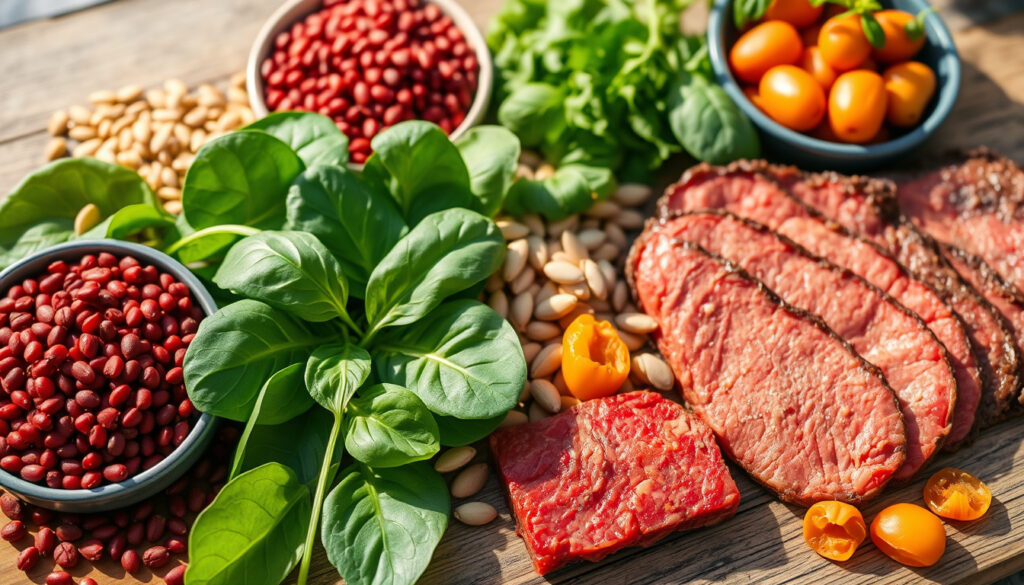
High Iron Foods: Top Sources to Boost Intake Daily
Few things throw off your energy levels quite like low iron — and because your body can’t produce iron on its own, what you eat matters more than almost anything else. This guide covers which foods pack the most iron per serving, why your body absorbs some forms far more easily than others, and the simple food-pairing tricks that make every bite work harder for you.
RDA for Adult Women: 18 mg/day ·
RDA for Adult Men: 8 mg/day ·
Pregnant Women RDA: 27 mg/day ·
Heme Iron Absorption: 15-35% ·
Non-Heme Iron Absorption: 2-20%
Quick snapshot
- Beef liver tops heme sources at 5 mg per 3 oz serving (Red Cross Blood)
- Spinach cooked delivers 6.4 mg iron per cup (USDA Dietary Guidelines)
- Vitamin C doubles non-heme iron absorption (UC Davis Nutrition)
- Individual absorption variance depends on gut health and genetics (NCBI StatPearls)
- Exact impact of cooking method on plant iron bioavailability varies (NCBI StatPearls)
- 2024 USDA Dietary Guidelines updated iron food-source lists (USDA Dietary Guidelines)
- 2022 ACS Omega review analyzed absorption factors across food categories (ACS Omega)
- Personalized iron tracking via apps and wearable health devices
- Growing fortified-food market targeting plant-based eaters
Iron content and absorption rates vary substantially across food sources, as shown in this comparison of heme and non-heme iron foods.
| Food (per serving) | Iron (mg) | Type |
|---|---|---|
| Beef liver (3 oz) | 5.0 | Heme |
| Chicken liver (3 oz) | 4.4 | Heme |
| Beef chuck (3 oz) | 2.1 | Heme |
| Oysters (3 oz) | 4.5 | Heme |
| Clams (3 oz) | 3.2 | Heme |
| Lentils (½ cup cooked) | 3.3 | Non-heme |
| Tofu (½ cup) | 2.0 | Non-heme |
| Spinach (½ cup cooked) | 3.2 | Non-heme |
| Quinoa (½ cup cooked) | 1.4 | Non-heme |
| Pumpkin seeds (1 oz) | 2.3 | Non-heme |
What foods are highest in iron?
Iron comes in two forms, and the difference in how your body uses them is stark. Heme iron — found in meat, fish, and poultry — absorbs at 15-35%, while non-heme iron from plants and eggs maxes out around 2-20% under ideal conditions. For context: heme iron makes up only about 10-15% of dietary iron in Western diets but accounts for roughly 40% of what your body actually absorbs.
Meats and organ meats
- Beef liver: The top heme source, delivering about 5 mg iron per 3-ounce cooked serving. The Red Cross Blood donation guide notes organ meats like liver can achieve 25-30% absorption efficiency.
- Red meat: Chuck, sirloin, and other beef cuts provide 2-3 mg per 3-ounce serving. Dark poultry meat also ranks high on heme iron lists, per Cleveland Clinic dietary guidance.
Seafood
- Oysters and clams: Shellfish are standout heme sources. Oysters pack roughly 4.5 mg per 3-ounce serving. Cleveland Clinic dietary guidance lists shellfish alongside organ meats as “excellent” iron sources.
Vegetables and legumes
- Spinach: Cooked spinach delivers 6.4 mg iron per cup, according to USDA Dietary Guidelines — one of the highest non-heme counts in any plant food.
- Lentils and beans: A half-cup of cooked lentils provides around 3.3 mg non-heme iron. Harvard Nutrition Source classifies legumes as a primary non-heme strategy for plant-based eaters.
Nuts, seeds, and grains
- Pumpkin seeds: About 2.3 mg per ounce, making them the highest nut/seed source per serving.
- Quinoa and tofu: Both offer 1.4-2 mg per half-cup. HealthLink BC iron food guide notes tofu as a versatile plant option that absorbs better when paired with vitamin C-rich foods.
How can I raise my iron levels quickly?
Meeting your RDA — 18 mg for women, 8 mg for men, 27 mg during pregnancy — requires more than just picking iron-rich foods. Absorption is where the real leverage lives. Your body absorbs heme iron fairly reliably regardless of what else you eat, but non-heme iron’s fate depends heavily on your plate companions.
Pairing a spinach salad with citrus or bell peppers can double the iron your body pulls from that meal. Small shifts in food pairings beat chasing higher iron doses alone.
Pair with vitamin C
- Citrus, tomatoes, and bell peppers: Adding orange juice, sliced peppers, or strawberries to a non-heme meal can double absorption, according to UC Davis consumer iron guide. Broccoli and cantaloupe serve the same role.
- The MFP factor: Eating a small amount of meat alongside plant iron boosts non-heme absorption — a mechanism InsideTracker absorption analysis calls the “meat, fish, poultry” factor.
Cook in cast iron
- Cooking acidic foods like tomato sauce in cast iron skillets can increase iron content of the food itself — a low-effort hack that compounds over meals.
Avoid inhibitors like tea and coffee
- Tannins and polyphenols: Black tea, coffee, and red wine contain compounds that block non-heme uptake. Harvard Nutrition Source notes polyphenols as a key reason tea drinkers with plant-based diets often struggle with iron status.
- Calcium and dairy: Calcium inhibits both heme and non-heme absorption. Cheese, milk, and antacids reduce iron uptake — Cedars-Sinai iron-rich foods guide flags dairy as a hidden iron blocker despite its nutritional value otherwise.
- Phytates in grains and beans: Soaking beans, lentils, and grains overnight and cooking them thoroughly reduces phytate interference, per GoodRx dietary guidance.
Which drink is high in iron?
Beverages aren’t a major iron source by volume, but a few stand out — and timing them right matters as much as what you choose.
Iron-fortified juices
- Prune juice: One of the few juices with meaningful iron content. GoodRx dietary guidance lists prune juice as a drinkable option for those who struggle with iron tablets.
- Fortified orange juice: Commercial fortified juices can deliver 20-25% of the Daily Value per cup, and the vitamin C they contain supercharges non-heme absorption from any meal consumed alongside.
Herbal teas
- Nettle tea: Traditional herbalists value stinging nettle as a mild iron source, though iron content varies widely by preparation. It’s a complement, not a primary strategy.
Smoothie boosters
- Blending spinach, fortified cereal, tofu, and citrus into a smoothie sidesteps phytate inhibition somewhat and puts multiple enhancers in one glass — a practical approach for kids or anyone sensitive to strong flavors.
What this means: drinks alone won’t close a significant iron gap, but prune juice and fortified options are useful adjuncts — and timing them between meals rather than with meals avoids the absorption-hit from mixing iron with calcium or tannins.
What are 5 signs of low iron?
Iron deficiency doesn’t arrive all at once. Your body depletes its stores gradually, and symptoms mirror many other conditions — which is why the pattern matters more than any single sign.
Fatigue from iron deficiency is not ordinary tiredness — it persists even after rest and often comes with a visible pallor that others notice before you do.
Common symptoms
- Persistent fatigue: The most common sign. Your muscles and organs receive less oxygen when hemoglobin is low. Harvard Nutrition Source identifies fatigue as the hallmark of iron deficiency anemia.
- Shortness of breath: Even light activity can leave you winded when oxygen transport is compromised.
- Pale skin and brittle nails: Reduced hemoglobin shows in skin tone, nail ridges, and hair shedding.
- Headaches and dizziness: Lower oxygen delivery to the brain triggers frequent headaches, especially in women.
- Cravings for non-food items (pica): A recognized but less common symptom, often involving ice, clay, or starch cravings.
When to see a doctor
- Symptoms lasting more than two weeks despite dietary changes warrant a blood test to check ferritin and hemoglobin levels.
- Vegetarians, heavy menstruators, and pregnant women should get baseline iron panels — symptoms alone aren’t reliable predictors in these groups.
The pattern: iron deficiency is easy to dismiss as stress or poor sleep until it becomes severe. If two or more symptoms overlap, a simple blood test clears the question in days.
How to get 100% of iron a day?
Hitting 18 mg as a woman or 8 mg as a man through food alone is straightforward if you include one or two heme sources daily. Plant-based eaters need more careful stacking, but it’s achievable without supplements.
Sample meal plans
- Omnivore example: 3 oz beef liver at lunch (5 mg) + 3 oz salmon at dinner (0.8 mg) + ½ cup lentils (3.3 mg) + 1 cup fortified cereal (18 mg fortified) = well over 18 mg.
- Flexitarian approach: Chicken thigh for dinner + lentil soup at lunch + spinach salad with orange segments = comfortable coverage without liver.
Vegetarian options
- Iron-fortified cereals and breads: Harvard Nutrition Source notes that US fortification makes grains a reliable non-heme pillar.
- Legume and seed rotations: Lentils, chickpeas, pumpkin seeds, and cashews across meals add up quickly.
- Vitamin C at every plant meal: Pairing non-heme sources with citrus, tomatoes, or bell peppers compensates somewhat for the lower absorption rate.
For pregnancy and babies
- Pregnant women need 27 mg daily — roughly 50% higher than non-pregnant women. USDA Dietary Guidelines recommends combining heme sources with fortified foods during pregnancy.
- Babies transitioning to solids rely on iron-fortified cereals and pureed meats as primary sources — their iron needs per kilogram exceed adults’. Cleveland Clinic dietary guidance notes that infant iron deficiency can impact development if unaddressed.
The trade-off: omnivores have a shorter path to their iron target — a single steak or liver serving covers a large share of daily needs. Plant-based eaters need to plan more deliberately, but the evidence shows 5-12% bioavailability from plant sources is sufficient if intake and enhancers are managed consistently.
What we know — and what we don’t
Confirmed
- RDA values from NIH: 18 mg women, 8 mg men, 27 mg pregnancy
- Iron mg amounts per food from USDA databases and Dietary Guidelines
- Heme absorbs 15-35%; non-heme absorbs 2-20%
- Vitamin C doubles non-heme uptake
- Calcium, tannins, and phytates inhibit both types
Less certain
- Exact absorption improvement per individual varies with gut microbiome
- Long-term effects of phytate reduction via soaking are well-supported but dosage-dependent
- Cast iron cookware iron-leaching varies significantly by skillet age and food acidity
What experts say
“The body absorbs iron more easily from animal sources (heme iron) than plant sources (non-heme iron).”
— USDA Dietary Guidelines for Americans (official government guidance), 2024
“Vegetarians — those who eat a diet without heme iron from meats, fish, and poultry — may develop iron deficiency anemia if they do not include adequate non-heme iron foods in the diet.”
— Harvard T.H. Chan School of Public Health Nutrition Source (academic nutrition research)
“Heme iron is well absorbed and relatively little affected by other foods eaten in the same meal. On the other hand, the absorption of non-heme iron, the major dietary pool, is greatly influenced by meal composition.”
— Research cited by Hemochromatosis Help (clinical health resource)
Related reading: Strawberry Jam Recipe · Aldi Cocolicious Chocolate Water
Beef liver and spinach top heme and non-heme lists, while foods high in iron offer absorption tips perfect for anemia or pregnancy diets.
Frequently asked questions
Is 2 eggs a day enough iron?
Two eggs provide roughly 1.8 mg iron total — less than 10% of a woman’s daily RDA. Eggs are a useful non-heme source but shouldn’t be a primary iron strategy. Pairing them with orange juice or bell peppers helps, but you’d need multiple other iron-rich foods to cover your needs.
What food has the strongest iron?
Beef liver leads per serving, delivering about 5 mg iron per 3 ounces — and because it’s heme iron, your body absorbs most of it. Oysters, clams, and chicken liver round out the top tier. Among plant sources, cooked spinach at 6.4 mg per cup holds the highest iron content.
What boosts iron quickly?
Vitamin C is the fastest lever — adding citrus or bell peppers to an iron-rich meal can double non-heme absorption in that sitting. The MFP factor (eating a small amount of meat alongside plants) also helps. For heme sources, there’s no quick fix needed — they absorb reliably regardless.
What drink is very high in iron?
Prune juice and iron-fortified juices offer the most iron per serving among beverages. Most other drinks contribute negligible iron but can inhibit absorption (tea, coffee) or enhance it (vitamin C-fortified drinks consumed between meals).
What are the top iron-rich foods for vegetarians?
Lentils, spinach, tofu, quinoa, pumpkin seeds, and iron-fortified cereals are the plant anchors. Fortified grains and cereals are particularly reliable since US fortification standards make them a consistent iron source. Pairing these with vitamin C-rich foods is non-negotiable for absorption.
What are iron-rich foods for anemia?
For anemia recovery, heme sources like beef, liver, and shellfish work fastest due to superior absorption. If you follow a plant-based diet, combining lentils or spinach with a vitamin C source and minimizing tea, coffee, and calcium-rich foods at that meal is the key formula.
What are high iron foods for pregnancy?
Pregnant women need 27 mg daily. Organ meats, red meat, and shellfish cover heme iron needs efficiently. Fortified cereals, lentils, and spinach address non-heme needs, with vitamin C pairing to compensate for lower absorption. Many prenatal care guidelines recommend iron supplements alongside dietary iron during pregnancy regardless of diet.
More related posts
 Bed Bath N’ Table Guide: Locations, Sales & Clearance
 Long Sleeve Shirts: Men’s & Women’s Guide for Ireland
 Patrick Star: Species, Voice Actor, Facts, and Fan Theories
 Chrissy Amphlett: Cause of Death, Husband, and ‘I Touch Myself’
 Puka Nacua: Ethnicity, Family Records, and Pregame Tears
 Hillary Clinton: Age, Net Worth, Husband, Children, and Career
 Jesse Metcalfe: Marriage, Sobriety, Net Worth, and Career 2026
 Glenn Shorrock Health Rumors, Wife, and Little River Band Songs
