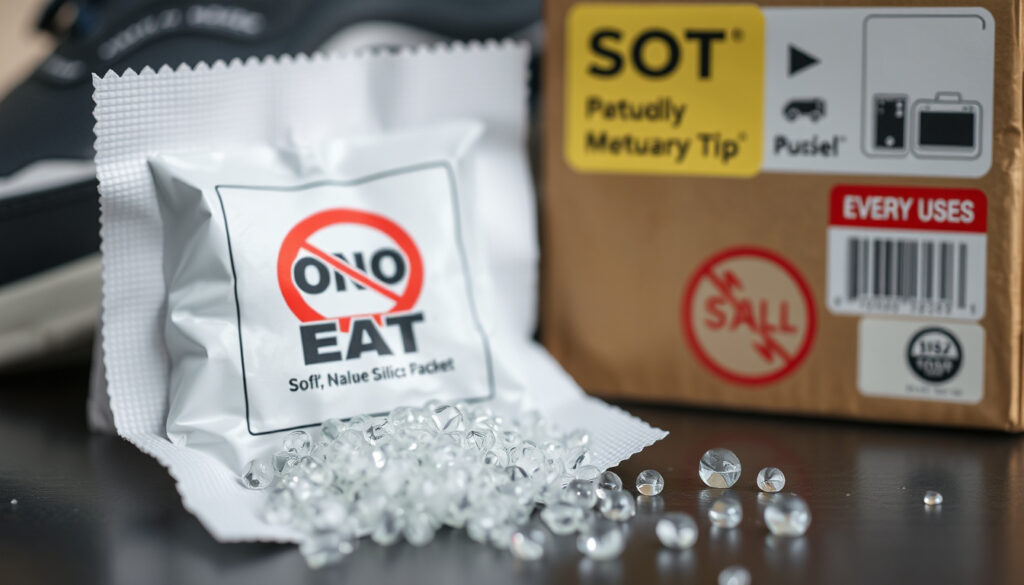
What Is a Silica Gel Packet? Uses, Safety & Reuse Facts
Silica gel packets are those small white sachets tucked into shoes and vitamin bottles with a “Do not eat” label that sounds more alarming than it is. These desiccant packets absorb moisture like tiny sponges, protecting everything from electronics to beef jerky, and they can be reused for months with a few simple steps.
Primary material: Silicon dioxide xerogel · Moisture absorption: Up to 40% of packet weight · Toxicity status: Non-toxic to touch or ingest small amounts · Warning label reason: Choking hazard, not poisoning
Quick snapshot
- Exact reuse cycles vary by packet brand and storage conditions
- Optimal reactivation timing differs between oven and microwave methods
- OSHA classifies consumer silica gel packets as non-hazardous as of 2024 (Fisher Scientific)
- Cylindrical canister desiccants increasing obstruction cases since 2020 (PMC peer-reviewed study)
- Save packets for shoes, closets, and medicine cabinets
- Recharge by heat when saturated, then use again
- Discard only torn, leaking, or contaminated packets
Five attributes define every silica gel packet: what it is, what it does, how safe it is, how to reuse it, and what to watch for.
| Attribute | Detail |
|---|---|
| Made of | Silica xerogel (silicon dioxide) |
| Form | Beads or pellets in paper or cloth packets |
| Function | Absorbs humidity from surrounding air |
| Toxicity | Non-toxic, but a choking hazard |
| Common locations | Shoes, handbags, electronics, dry food |
| Cobalt chloride variant | Toxic — changes from blue to pink when saturated |
What are silica gel packets used for?
Manufacturers include silica gel packets in product packaging to keep items dry during storage and transit. Without desiccants, moisture in the air would damage electronics, corrode metal parts, spoil food, and ruin medications over time.
Common packaging applications
- Shoes and leather goods: Prevents mold, mildew, and odor in enclosed spaces
- Electronics: Protects cameras, phones, and components from humidity damage
- Dry foods: Extends shelf life of beef jerky, dried fruit, and spices
- Medications and vitamins: Keeps pills intact and effective
How they absorb moisture
Silica gel works through adsorption — not absorption. The porous silica beads attract water molecules to their vast internal surface area, trapping moisture inside microscopic pores. According to Earth911, a single gram of silica gel can have a surface area of 500–800 square meters. The material can hold up to 40% of its own weight in water before becoming fully saturated.
One packet protects your $300 leather boots from moisture damage during shipping. For consumers, that packet is worth saving — especially in humid climates where shoes and closets suffer year-round.
The implication: a single packet that costs nothing at purchase protects valuables worth hundreds of dollars during shipping and storage.
Is it safe to touch silica gel packets?
Yes. Skin contact with silica gel packets poses no known health risk. The material is chemically inert, meaning it won’t react with your skin or absorb through it. You don’t need gloves, and you don’t need to wash your hands after handling intact packets.
Touching with bare hands
Everyday handling — picking up a packet from a new handbag, fishing one out of a vitamin bottle — requires no special precautions. According to NCBI toxicology profile, no adverse effects result from incidental exposure to non-respirable silica particles in consumer products. The beads are enclosed in paper or fabric, keeping them contained even if the packet gets squeezed.
Washing hands after contact
Standard silica gel packets don’t require hand-washing afterward. The Washington Poison Center notes that silica gel packets are “usually non-toxic but a choking hazard.” The only exception is if a packet is torn or leaking beads — in that case, wash your hands and dispose of the packet. Never handle torn packets if you have cuts on your hands, as the beads can cause irritation in open wounds.
The “Do not eat” warning exists because young children sometimes mistake these packets for food or candy. Watch for packets that have fallen out of packaging and are within reach of toddlers — that’s the real safety concern.
The pattern: while adults face no risk from handling intact packets, the choking hazard makes storage location critical for households with young children.
Is silica gel toxic?
Standard silica gel is non-toxic — not poisonous, not harmful in small amounts. However, one variant carries a real health risk: cobalt chloride-coated silica gel.
Toxicity to humans
For regular, unmarked silica gel, the story is straightforward. The oral LD50 in rats exceeds 5,000 mg/kg, placing it in the “practically non-toxic” category per Fisher Scientific safety data. Healthline confirms that silica gel is chemically inert and non-toxic if ingested in small amounts.
The warning labels exist because of choking risk, not poisoning. Washington Poison Center puts it plainly: the primary hazard is choking.
However, packets containing cobalt chloride are different. WebMD reports that cobalt chloride-coated silica gel is toxic, causing nausea and vomiting. These packets were once common but have been phased out in food-related applications. They change color from blue to pink when saturated — a useful indicator, but the cobalt chloride makes them unsuitable for food contact.
What happens if eaten
For standard silica gel: incidental ingestion typically causes no symptoms. The beads pass through the digestive tract unchanged. Healthline recommends drinking water to help the beads move through. In rare cases, large ingestion causes stomach pains, dehydration, or vomiting, per Popular Science. A child who eats an entire packet should be monitored, but a trip to the emergency room usually isn’t necessary unless the child shows distress.
For cobalt chloride packets: seek medical attention. The toxicity is real, not a scare tactic.
Overall it seems that when they do not contain cobalt chloride, silica gel packets are relatively safe to use.— Britta Baechler, senior manager of ocean plastics research at Popular Science
Cylindrical desiccant canisters — increasingly common in some products — pose a higher esophageal obstruction risk than paper or cloth packets, according to PMC peer-reviewed study. These rigid containers don’t conform to the throat like flat sachets do. If your product uses cylindrical canisters instead of packets, keep them out of reach of young children. Additionally, discard any packets that show visible degradation or unusual coloring beyond the standard appearance.
Why should you never throw away silica gel bags?
Because they’re reusable. Each time you toss a packet, you’re discarding a functional moisture-control tool that could protect your shoes, camera gear, or medications for weeks or months more.
Reuse options
- Shoes and boots: Drop a packet inside each time you store them for the season
- Closets and drawers: Place packets in humid storage areas to prevent musty odors
- Camera bags and electronics: Protects gear during travel or in damp conditions
- Food storage: Put packets in airtight containers with dried goods
- Medicine cabinets: Keeps pills and supplements dry in steamy bathrooms
Reactivation methods
When saturated, silica gel beads release their moisture when heated. Wallaby Goods provides two options:
- Oven method: Spread packets on a baking sheet at 200–250°F for 30 minutes to 2 hours
- Microwave method: Use defrost setting for 7–12 minutes — watch carefully to avoid melting the paper
The implication: a packet that cost nothing at purchase can serve your household for months if you simply store it in a zip-lock bag between uses.
When to throw away instead
Wise Dry advises discarding packets that are torn, leaking beads, contaminated, emit a burnt smell, or fail to change color when they should. Good-quality packets can be reused dozens of times. Torn packets belong in the trash — the beads inside aren’t worth salvaging.
Store saturated packets in a sealed zip-lock bag between uses to prevent premature reabsorption of ambient moisture. Label the bag with the date so you can track reuse cycles.
The pattern: a household that actively reuses just five silica gel packets across shoes, a camera bag, and a medicine cabinet saves money on moisture-control purchases while reducing single-use waste.
What is a silica gel packet made of?
Each packet contains silica xerogel — a porous form of silicon dioxide, the same compound found in sand and quartz. The “gel” name is historical; modern silica gel arrives as hard beads or pellets, not a liquid.
Composition details
The silicon dioxide in these packets isn’t table salt, despite the white-bead appearance. Salt (sodium chloride) dissolves in water; silica gel doesn’t — it adsorbs moisture without dissolving. The material is amorphous silica, not crystalline, which changes its properties significantly. PMC peer-reviewed study notes that silica gel’s innocuous nature makes it suitable as a lubricant in solid pharmaceutical tablets.
Is it salt?
No. Salt and silica gel share a white, granular appearance, but they behave completely differently. Salt absorbs into solution when wet; silica gel holds moisture in its pores without dissolving. Salt cannot be “recharged” by heating; silica gel releases its moisture and becomes active again. If you taste it (not recommended), salt is salty; silica gel is essentially tasteless.
Silica gel products are usually considered minimally toxic substances and primarily pose a risk of choking hazard in young children.— Researchers at PMC peer-reviewed study
The implication: confusing silica gel with salt is harmless in practice — both are non-toxic — but the behavioral difference matters when you need moisture control versus seasoning food.
Related reading: electronics · shoes
Frequently asked questions
What is a silica gel packet called?
Manufacturers and suppliers call them desiccant sachets or silica gel pouches. The formal name for the material inside is “silica xerogel.” Some regional markets use the term “silica gel bags” for loose-pack versions sold in bulk.
Is silica gel poisonous?
No — standard silica gel packets are non-poisonous. The LD50 classification places them in the “practically non-toxic” range. The only poison risk comes from cobalt chloride-coated variants, which have been largely phased out of consumer packaging. If a packet is unmarked or labeled “cobalt chloride free,” it’s safe from a toxicity standpoint.
Do you die if you eat silica gel?
No. Accidental ingestion of standard silica gel from a consumer packet will not kill you. The beads pass through the digestive tract without being absorbed. A large amount would need to be consumed to cause intestinal obstruction, and even then, symptoms are usually limited to stomach discomfort. Drink water if you’ve ingested silica gel and monitor for any distress. Seek medical attention if a young child has eaten multiple packets or shows signs of choking.
How to use silica gel?
Place packets wherever you want to control humidity: inside stored shoes, in camera bags, inside dry-food containers, in gun safes, or in closets during humid months. Store saturated packets in a sealed zip-lock bag between uses. When needed, recharge them in a 200–250°F oven for 30 minutes to 2 hours. Let cool completely before using again.
How to use silica gel in shoes?
Drop one or two packets inside each shoe when storing them, especially after wearing in hot or humid conditions. For shoes you wear daily, place a packet inside overnight — the desiccant absorbs perspiration moisture, reducing odor-causing bacteria. Replace packets every few weeks during active use, or recharge when they feel heavier or look slightly damp.
Consumers who save and reuse these packets gain a free, reusable moisture-control tool that works for months. The choice is clear: tuck them into your shoe closet or keep buying fresh ones.
More related posts
 Lola Young Messy Lyrics – Full Text, Versions and Meaning
 Kia Sportage 2026 – Release Date, Price and Specs
 Donald Sutherland: His Illness, Relationships, and Legacy
 Father’s Day 2024: Date, History, Gifts & Irish Traditions
 Cartier Love Ring – History, Prices and Authentication Guide
 Jenna Dewan: Biography, Relationships, Movies, and Career Facts
 Mount Baw Baw: Melbourne’s Closest Ski Resort Guide
 Russell Crowe: Divorce, Accusations & Verified Facts
