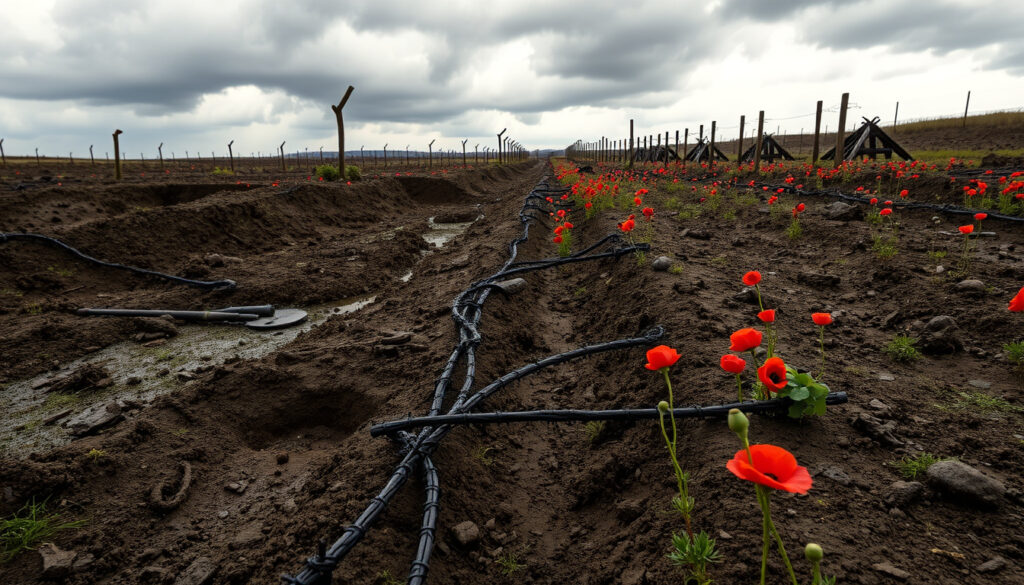
World War 1 – Causes, Key Battles and Legacy
World War I, often called the Great War, reshaped the political landscape of the 20th century and left an indelible mark on global history. Lasting from 1914 to 1918, the conflict drew in nations from across the world, fundamentally altering international relations, borders, and societies on an unprecedented scale.
The war emerged from a complex web of tensions that had been building across Europe for decades. Militarism, imperialism, nationalism, and an intricate system of alliances combined with immediate triggers to ignite a conflict that would claim millions of lives and redraw the map of Europe and the Middle East.
Understanding the causes, key events, and consequences of World War I remains essential for comprehending the modern world’s geopolitical foundations. This article examines the major factors that sparked the conflict, the pivotal moments that defined it, and the lasting impact it had on nations and peoples around the globe.
What Caused World War I?
The origins of World War I trace to several interconnected forces that had been gathering momentum throughout the late 19th and early 20th centuries. Historians generally identify four long-term causes, often summarized using the acronym MICA: Militarism, Imperialism, Nationalism, and the system of Alliances that divided Europe into opposing camps.
Militarism and Arms Racing
European powers had been engaged in an intensive arms race for years before the war began. Nations invested heavily in military expansion, building larger navies and standing armies. This militaristic culture fostered a belief among political and military leaders that wars could be won quickly and decisively through superior firepower and strategic planning.
New weapons including machine guns, tanks, airplanes, and submarines transformed the battlefield, yet military planners underestimated how these technologies would compound casualties when faced with defensive positions.
Imperial Rivalries
Competition for colonies and global influence intensified tensions between the major powers. Britain and France dominated vast colonial territories, while Germany, Austria-Hungary, and the Ottoman Empire sought to expand their own empires. These rivalries created deep-seated resentments and heightened suspicions between nations.
Nationalist Sentiments
Nationalism fueled ethnic tensions throughout Europe and the Balkans. France harbored resentment over Alsace-Lorraine, which Germany had annexed following the Franco-Prussian War of 1870–1871. Serbia opposed Austro-Hungarian control of Bosnia-Herzegovina, where Slavic populations sought self-determination. These nationalist aspirations created flashpoints that would prove catastrophic.
On June 28, 1914, Gavrilo Princip, a Bosnian Serb nationalist, assassinated Archduke Franz Ferdinand of Austria-Hungary and his wife Sophie in Sarajevo. This event triggered a cascade of diplomatic failures and mobilizations that escalated rapidly into full-scale war within weeks.
The Alliance System
The alliance system divided Europe into two major blocs. The Triple Entente comprised France, Russia, and Britain, while the Triple Alliance originally included Germany, Austria-Hungary, and Italy. As tensions mounted, these agreements meant that conflict between any two nations could draw entire continents into war.
While the alliance system did not create the tensions that led to war, it transformed a regional dispute into a continental catastrophe. Once major powers began mobilizing, the interlocking commitments made retreat increasingly difficult.
July 28, 1914 – November 11, 1918
Allied Powers vs. Central Powers
16–20 million
Allied Victory, Treaty of Versailles
Key Facts at a Glance
| Fact | Details |
|---|---|
| War Began | July 28, 1914 (Austria-Hungary declared war on Serbia) |
| War Ended | November 11, 1918 (Armistice signed) |
| Central Powers | Germany, Austria-Hungary, Ottoman Empire, Bulgaria |
| Allied Powers | France, Russia, Britain, later Italy (1915), Japan, United States (1917) |
| Major Theater | Western Front (France and Belgium) |
| Wounded | Approximately 21–25 million |
When Did World War I Start and End?
World War I began officially on July 28, 1914, when Austria-Hungary declared war on Serbia following the assassination of Archduke Franz Ferdinand. The conflict concluded nearly four and a half years later, with an armistice signed on November 11, 1918, at the eleventh hour of the eleventh day of the eleventh month.
The Path to War: June–August 1914
The weeks following the assassination witnessed a rapid deterioration of diplomatic relations. Austria-Hungary issued an ultimatum to Serbia on July 23, 1914, demanding compliance with its terms. When Serbia rejected key provisions, Austria-Hungary declared war on July 28.
Russia mobilized in defense of Serbia on July 29. Germany, bound by treaty to Austria-Hungary, declared war on Russia on August 1 and on France on August 3. German forces also invaded neutral Belgium on August 3 to execute the Schlieffen Plan, a strategy calling for a rapid sweep through Belgium to defeat France before turning east to face Russia.
Britain entered the war on August 4, 1914, honoring its commitment to defend Belgium’s neutrality. What had begun as a crisis in the Balkans had become a continental war.
The Course of the War
The war quickly settled into a grinding stalemate, particularly along the Western Front, where opposing forces dug extensive trench systems stretching from the English Channel to Switzerland. Attempts to break through these defensive lines resulted in massive casualties.
The Eastern Front saw more fluid warfare, with forces advancing and retreating across vast territories. The Ottoman Empire entered the war in late 1914, opening additional theaters in the Caucasus, the Middle East, and the Suez Canal region.
The United States joined the Allies in April 1917, following Germany’s unrestricted submarine warfare and the interception of the Zimmermann Telegram, which proposed a German-Mexican alliance against the United States. American involvement provided crucial reinforcements and resources that helped tip the balance against the Central Powers.
Who Won World War I and What Were the Outcomes?
The Allied Powers emerged victorious from World War I, though the cost of that victory was staggering. The Central Powers collapsed one by one: Bulgaria signed armistice in September 1918, followed by the Ottoman Empire in October, Austria-Hungary in November, and Germany on November 11, 1918.
The Treaty of Versailles
The peace settlement that formally ended the war was negotiated at the Palace of Versailles outside Paris. Signed on June 28, 1919, exactly five years after the assassination of Archduke Franz Ferdinand, the Treaty of Versailles imposed harsh terms on Germany.
Germany lost approximately 13 percent of its pre-war territory, including Alsace-Lorraine to France and portions of Prussia to the newly created Polish state. The treaty limited the German military to 100,000 troops, prohibited conscription, restricted naval capabilities, and required Germany to accept sole responsibility for the war—labeled as the “war guilt clause.”
Reparations payments, initially set at 226 billion gold marks (later reduced), placed a significant economic burden on Germany. The treaty also established the League of Nations, intended to maintain world peace, though the United States never joined the organization.
Many historians argue that the Treaty of Versailles destabilized Europe and contributed to conditions that eventually led to World War II. The harsh penalties and the war guilt clause created resentment in Germany that Adolf Hitler would later exploit.
Empire Collapse and New Nations
The war’s conclusion fundamentally altered the political map of Europe and the Middle East. Four major empires that had shaped the 19th century world collapsed: the Ottoman Empire, the Austro-Hungarian Empire, the German Empire, and the Russian Empire.
New nations emerged from their territories, including Poland, Czechoslovakia, Yugoslavia, Finland, Estonia, Latvia, Lithuania, and Iraq. The League of Nations administered former Ottoman territories in the Middle East as mandates under the control of Britain and France, arrangements that would later become sources of conflict.
What Were the Major Battles and Alliances?
The military alliances that shaped World War I developed over decades of diplomatic maneuvering. Understanding these arrangements helps explain how a regional crisis escalated into a global conflict involving nations from six continents.
The Alliance Systems
The Triple Entente brought together France, Russia, and Britain, forming what would become the Allied Powers. This alignment had developed through a series of diplomatic agreements in the early 1900s, primarily driven by shared concerns about German expansion.
The Triple Alliance originally consisted of Germany, Austria-Hungary, and Italy. Italy would later switch sides in 1915, joining the Allies after being promised territories from the Central Powers.
The Ottoman Empire and Bulgaria joined the Central Powers during the war, while Japan, Italy (after 1915), the United States, Portugal, and others joined the Allied Powers. The expansion of these blocs transformed a European conflict into a world war.
Major Battles of World War I
The First Battle of Ypres in October 1914 marked a critical turning point. Allied and German forces clashed in Belgium, and when neither side achieved victory, both began constructing fortified trench lines. This engagement established the static warfare pattern that would characterize much of the Western Front for the next four years.
Other significant battles included the Battle of the Somme (1916), which resulted in over one million casualties over four months of fighting, and the Battle of Verdun, which lasted nearly ten months and produced approximately 700,000 casualties. The Battle of Gallipoli (1915–1916) saw Allied forces attempt to open a supply route to Russia through the Ottoman Empire, ultimately withdrawing after heavy losses.
On the Eastern Front, the Battle of Tannenberg (1914) resulted in a decisive Russian defeat, while the Brusilov Offensive (1916) devastated Austro-Hungarian forces. Throughout the war, naval engagements including the Battle of Jutland (1916) and the Battle of the Falkland Islands (1914) unfolded across the world’s oceans.
Trench Warfare: A Defining Feature
Trench warfare dominated the Western Front from late 1914 until the war’s final months. Soldiers on both sides dug extensive networks of parallel trenches, communication trenches, and support positions, creating a static line that stretched hundreds of miles.
These conditions subjected troops to constant danger from artillery, machine guns, snipers, and chemical weapons. The space between the opposing trench lines, known as no man’s land, became a killing zone that soldiers dreaded crossing. Attempts to break the stalemate through frontal assaults resulted in enormous casualties with minimal territorial gains.
How Many Died in World War I?
The human cost of World War I was catastrophic. Estimates suggest approximately 16 to 20 million people died as a direct result of the conflict, with an additional 21 to 25 million wounded. These figures represent extraordinary proportions of entire generations, particularly young men in combatant nations.
Breaking Down the Casualties
Military deaths accounted for the majority of casualties. Estimates indicate around 8 to 10 million soldiers died in combat or from wounds, disease, and POW deaths. Civilian deaths, though more difficult to quantify, resulted from military operations, famines, and disease outbreaks exacerbated by the war.
The nations that suffered the highest absolute numbers of military deaths included Russia (approximately 1.7–2 million), Germany (around 1.8 million), France (approximately 1.4 million), Austria-Hungary (approximately 1.2 million), Britain and its empire (approximately 1.2 million), and the Ottoman Empire (around 800,000).
The death toll from World War I exceeded the combined losses from all wars between 1815 and 1914. At the war’s peak, artillery shells were fired at a rate of one million per day on the Western Front alone.
The widespread use of new military technologies amplified casualties beyond anything previously seen in warfare. Machine guns, rapid-fire artillery, poison gas, and aerial bombardment caused unprecedented suffering. Trench warfare and the practice of launching mass infantry assaults against entrenched positions with modern weapons contributed heavily to the death toll.
The Timeline of World War I
The following timeline captures the major events that shaped the course of World War I, from the assassination that ignited the conflict to the armistice that ended it.
- June 28, 1914: Archduke Franz Ferdinand and his wife Sophie are assassinated in Sarajevo by Gavrilo Princip. This event triggers the July Crisis that leads to war.
- July 28, 1914: Austria-Hungary declares war on Serbia, marking the official beginning of World War I.
- August 1–4, 1914: Germany declares war on Russia and France; invades Belgium; Britain declares war on Germany.
- September 1914: First Battle of the Marne halts German advance; trench warfare begins on Western Front.
- October 31, 1914: First Battle of Ypres results in stalemate; Western Front settles into static trench warfare.
- April 1915: Second Battle of Ypres sees first large-scale use of poison gas by Germany.
- 1916: Battle of Verdun and Battle of the Somme produce enormous casualties; Battle of Jutland, the largest naval battle, occurs.
- April 6, 1917: United States declares war on Germany, joining the Allied Powers.
- November 11, 1918: Armistice signed; fighting ceases at the eleventh hour of the eleventh day of the eleventh month.
- June 28, 1919: Treaty of Versailles signed, formally ending the war.
What We Know and What Remains Unclear
Historians have established certain facts about World War I with considerable confidence, yet debates continue about other aspects of the conflict. Understanding both what is established and what remains contested helps provide a nuanced picture of this pivotal historical event.
| Established Information | Areas of Ongoing Debate |
|---|---|
| War began July 28, 1914, and ended November 11, 1918 | Precise degree to which each factor caused the war |
| Allied Powers victory over Central Powers | Whether the war was inevitable or could have been avoided |
| Major battles, trench warfare, and key technologies used | Exact casualty figures remain approximate |
| Treaty of Versailles imposed harsh terms on Germany | Responsibility for starting the war (degree of guilt) |
| Collapse of four major empires | Long-term economic and social impacts |
The Legacy and Context of the Great War
World War I fundamentally reshaped the modern world in ways that continue to influence geopolitics, international relations, and cultural memory. The conflict destroyed centuries-old empires and created new nations, redrew boundaries across Europe and the Middle East, and established precedents for how nations would interact in the 20th century.
The war introduced industrialized warfare on an unprecedented scale, demonstrating the catastrophic potential of modern military technology. The lessons learned during this conflict influenced military strategy, diplomacy, and international institutions throughout the following century.
The Middle East particularly felt the war’s lasting impact. British and French control over former Ottoman territories, established through the League of Nations mandate system, created boundaries and political structures that later faced challenges. Figures like Lawrence of Arabia played significant roles in campaigns throughout this region, shaping regional dynamics for decades.
Historians continue to study World War I to understand its causes, conduct, and consequences. Military historians examine the evolution of tactics and technology, while political historians analyze the diplomatic failures and systemic pressures that transformed a regional crisis into a global catastrophe. The conflict remains a subject of scholarly debate and public commemoration.
Sources and Perspectives
Understanding World War I requires drawing from diverse historical sources, including government archives, military records, personal correspondence, newspaper accounts, and scholarly analyses. Museums, libraries, and memorial sites around the world preserve artifacts and documentation that help keep the memory of this conflict alive.
“The lamps are going out all over Europe; we shall not see them lit again in our lifetime.”
— Sir Edward Grey, British Foreign Secretary, August 1914
Organizations including the Imperial War Museums in Britain, the National WWI Museum and Memorial in Kansas City, and the United States Holocaust Memorial Museum maintain extensive collections and educational resources about the conflict.
Scholarly consensus holds that the war resulted from a combination of long-term structural factors and short-term political decisions. As Britannica notes, the alliance systems, imperial competitions, and nationalist tensions created conditions ripe for conflict, while the July Crisis of 1914 provided the immediate trigger that set events in motion.
Key Takeaways
World War I remains one of the most significant events in human history, a conflict that reshaped nations, redrew borders, and set the stage for the turbulent 20th century. The war demonstrated both the destructive potential of modern industrial warfare and the fragility of international diplomatic systems.
The four long-term causes—militarism, imperialism, nationalism, and alliance systems—combined with immediate triggers to produce a catastrophe that claimed millions of lives. Understanding these factors helps illuminate both the historical circumstances that led to war and the lessons that remain relevant for international relations today.
The conflict’s conclusion, marked by the Treaty of Versailles, created new tensions that would eventually contribute to another global war. This interconnection underscores the importance of studying World War I not merely as an historical event, but as a pivotal moment whose consequences continue to shape our world. For those interested in military history, understanding this era provides essential context for subsequent conflicts, including the campaigns examined in works like King and Conqueror, which explores the classical foundations of military strategy.
Frequently Asked Questions
Why is it called World War I?
The term “World War I” emerged after World War II to distinguish it from the second global conflict. During and after the first war, it was commonly called the Great War or the War to End All Wars.
What was the Schlieffen Plan?
The Schlieffen Plan was Germany’s pre-war military strategy calling for a rapid invasion of France through Belgium to avoid fighting a two-front war against both France and Russia simultaneously.
What technology was used in World War I?
World War I introduced or expanded machine guns, tanks, airplanes, submarines, and chemical weapons. These technologies contributed to unprecedented casualties on the battlefield.
Who were the leaders in World War I?
Key leaders included Kaiser Wilhelm II of Germany, Tsar Nicholas II of Russia, Emperor Franz Joseph of Austria-Hungary, King George V of Britain, President Woodrow Wilson of the United States, and Sultan Mehmed V of the Ottoman Empire.
What was trench warfare?
Trench warfare involved soldiers digging extensive networks of trenches to protect themselves from enemy fire. It dominated the Western Front from 1914 to 1918, creating a static stalemate with massive casualties.
Who won World War I?
The Allied Powers, consisting of France, Britain, Russia (later the Soviet Union), Italy, Japan, and the United States among others, defeated the Central Powers, which included Germany, Austria-Hungary, the Ottoman Empire, and Bulgaria.
What was the Treaty of Versailles?
The Treaty of Versailles, signed in 1919, formally ended World War I. It imposed harsh penalties on Germany, including territorial losses, military restrictions, and reparations payments.
More related posts
 R.M. Williams Sale Ireland 2025 | Best Prices & Stockists
 Sarah Rafferty: Biography, Net Worth, and Life After Suits
 Eric Stonestreet: Biography, Wife, Net Worth, and Modern Family
 Playboi Carti: Biography, Health & LGBTQ Rumors, Dublin 2026
 David Pocock: From Rugby Star to Independent Senator
 Skylar Astin: Name Change, Divorce, and Pitch Perfect Exit
 Max Thieriot: Wife, Children, Net Worth, and Why He Left SEAL Team
 Zac Lomax: Western Force Switch & NRL Exit Reasons
