Mount Baw Baw: Melbourne’s Closest Ski Resort Guide
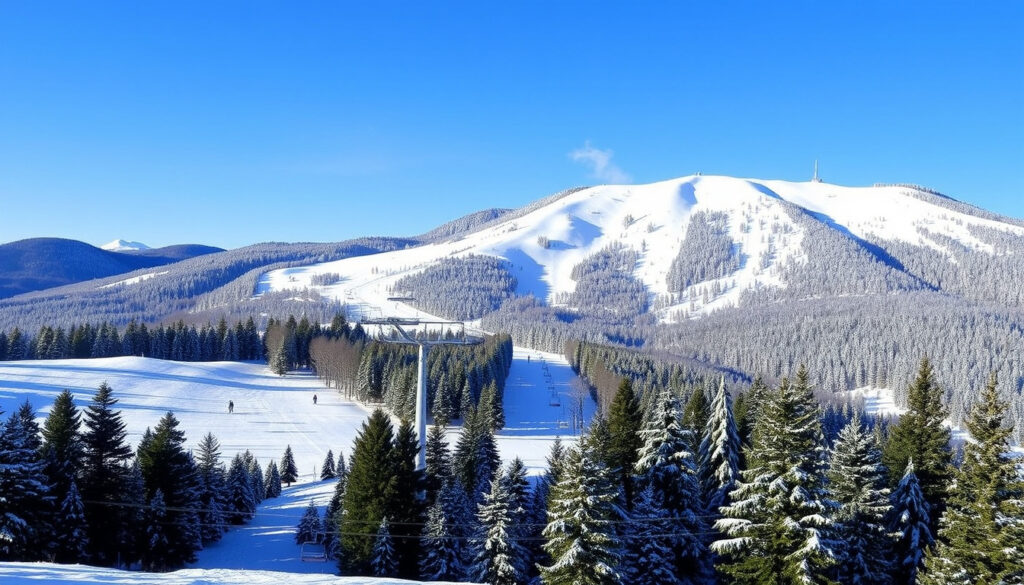
If you’ve ever watched your Melbourne-based kids eye the snow on travel shows with that longing look, Mount Baw Baw is your nearest fix. Sitting just 2.5 hours from the city in the Gippsland highlands, it’s Australia’s closest downhill ski resort to Melbourne—a fact that makes weekend snow trips genuinely doable rather than an expedition. Families return year after year not for powder bragging rights, but because everything here works: beginner-friendly runs, dedicated toboggan parks, and accommodation you can walk to in ski boots.
Distance from Melbourne: 2.5 hours · Location: Gippsland, Victoria, Australia · Plateau: Baw-Baw Plateau, Great Dividing Range · Key Attraction: Ski, snowboard, toboggan, snow play · National Park: Baw Baw National Park
Quick snapshot
- Melbourne’s closest downhill ski resort at 2.5 hours from the CBD (Tot Hot or Not)
- 35 hectares of snow terrain with 15 ski runs across 7 lifts (Tot Hot or Not)
- Village elevation sits at 1460m, summit reaches 1564m (Family Holiday Destinations)
- Current real-time snow depth measurements
- Exact 2026 lift pass pricing structure
- Updated accommodation rates for the coming season
- 2026 ski season opens 6 June on King’s Birthday Weekend (Mount Baw Baw Official Website)
- Tobogganing runs daily from opening through season end (Mount Baw Baw Official Website)
- Peak snowfall historically arrives in July (Mount Baw Baw Official Website)
- Family-focused terrain expansions in the beginner zone
- Enhanced snowmaking capacity planned ahead of winter
- School holiday packages anticipated for the 2026 season
| Field | Value |
|---|---|
| Official Site | www.mountbawbaw.com.au |
| Wikipedia | en.wikipedia.org/wiki/Mount_Baw_Baw |
| Park Authority | www.parks.vic.gov.au/places-to-see/parks/baw-baw-national-park |
| Distance from Melbourne | 2.5 hours drive |
| Region | Victorian Alps, Gippsland |
Is Mt Baw Baw good for skiing?
Mount Baw Baw earns its reputation as Melbourne’s closest downhill ski resort through practical geography rather than altitude. The 2026 season kicks off on 6 June, when King’s Birthday Weekend marks the traditional opening across Victorian resorts (Mount Baw Baw Official Website). For families with beginner skiers, the terrain mix hits a sweet spot: over a third of slopes target first-timers, and 70% of runs are blue runs suited to beginners and intermediates (Ski Club of Great Britain).
Ski conditions
The resort operates 7 ski lifts across 35 hectares of developed snow terrain, with the longest run stretching 750 metres (Family Holiday Destinations). Tank Hill Terrain Park adds pipes, boxes, and rails for those building intermediate skills (Family Holiday Destinations). The resort also maintains 10 kilometres of cross-country ski trails, offering a different snow experience for families wanting to explore beyond groomed runs (Holidays with Kids). For families worried about snow reliability, a snow factory guarantees coverage throughout the season regardless of natural snowfall (Tot Hot or Not).
Mt Baw Baw is not chasing Perisher’s scale—it’s optimised for families who want their kids upright and smiling by lunchtime, not queueing for advanced terrain.
Suitability for beginners
Children as young as three can join ski and snowboard lessons, with classes split into age groups: 3-6 years, 7-12 years, and 13+ (Family Holiday Destinations). Classes cap at eight students per instructor, keeping ratios manageable for anxious first-timers (Family Holiday Destinations). Perhaps the most compelling starter offer: kids under six receive free first-try lessons for skiing and snowboarding (Family Travel). That removes the most common family hesitation—spending money on lessons before knowing whether a child will even enjoy the sport.
Upsides
- Melbourne’s closest downhill ski resort at 2.5 hours
- 70% beginner and intermediate-friendly blue runs
- Free first-try lessons for kids under six
- Lessons available from age three with small group sizes
- Australia’s longest dedicated toboggan park
- Snow factory guarantees coverage through the season
- Compact village layout walkable in ski boots
Downsides
- Lower altitude means smaller natural snowfall than interstate resorts
- Limited advanced terrain for experienced skiers seeking challenge
- Peak season weekends can crowd beginner runs
- Chain requirements add preparation steps for day-trippers
- No direct public transport options from Melbourne
What does Baw Baw mean?
The name “Baw Baw” derives from the Baw-Baw Plateau, a sub-range of the Great Dividing Range that forms the resort’s alpine backdrop. The name is thought to originate from a Woiwurrung word, though its precise meaning has been debated—some sources suggest an onomatopoeic reference to the sound of the wind through the snowgums, others link it to local Aboriginal words for water or the distinctive rounded mountain profile visible from surrounding valleys.
Name origin
Mount Baw Baw sits within Baw Baw National Park, which encompasses much of the plateau and protects critical subalpine ecosystems. The resort operates within a designated Alpine Resort zone that sits adjacent to but separately from the national park boundaries. Understanding this distinction matters for visitors planning activities: ski operations and resort facilities occupy the resort zone, while surrounding national park land offers additional bushwalking and nature experiences.
Cultural significance
The Baw Baw Frog, found only in this region, represents the plateau’s ecological uniqueness—a tiny, critically endangered species that survives in the sphagnum moss bogs at higher elevations. Parks Victoria manages the broader national park estate, balancing conservation with the limited commercial recreation footprint of the resort zone. The Mt Baw Baw Nutro Dingo Resource Centre adds another layer, offering family-friendly dingo encounters that blend education with entertainment (Holidays with Kids).
The Baw Baw region carries Aboriginal cultural heritage alongside its alpine ecology. Visiting families gain a richer experience when they understand they’re on Country with tens of thousands of years of Indigenous connection, not just a recreational facility.
What towns are close to Mount Baw Baw?
No major towns sit immediately adjacent to the resort—the drive itself passes through the Gippsland region, with the final mountain ascent leaving sealed roads for the steep, winding alpine approach. The most practical gateway towns for accommodation or supplies are Erica (roughly 45 minutes from the resort), Moe (around 1.5 hours), and the larger regional centre of Traralgon (approximately 2 hours from Melbourne). For Melbourne day-trippers, the 2.5-hour drive works comfortably with an early departure, leaving the CBD before 6am to reach the village for opening lifts.
Nearby access points
The main access road climbs through State Forest before reaching the resort village at 1460 metres elevation. Chain hire and fitting services operate at the resort entrance during declared snow seasons, removing the need to carry chains year-round if you’re not a regular snow driver (YouTube resort guide). During snow season, chains become mandatory for all vehicles entering the resort area—a condition enforced at the entry checkpoint.
Travel options
Private vehicle remains the only practical option for reaching Mount Baw Baw. No scheduled bus or rail services operate to the resort itself. Families travelling from Melbourne typically drive directly, with the route via the M1 and then the C477 scenic route providing the most straightforward access. Road condition reports are essential checking before departure during winter months—VicRoads provides real-time updates on the mountain access roads.
Do you have to pay to go to Mt Baw Baw?
Resort entry fees apply during the snow season, charged per vehicle to cover road maintenance, snow clearing, and access infrastructure. The entry fee structure places private vehicles at $60 per car, while buses pay a reduced rate of $19 per bus (YouTube resort guide). These fees sit separate from lift passes, lesson bookings, and equipment hire—families should budget for multiple cost components when planning a trip.
Entry fees
Beyond the vehicle entry fee, visitors purchase lift passes for access to ski lifts. The resort offers day passes, multi-day passes, and season passes, though specific 2026 pricing requires confirmation on the official website closer to opening. The entry fee alone does not grant access to slopes—think of it as a toll road charge rather than an activity entitlement. Budget-conscious families can still enjoy the snow experience through toboggan parks and snow play areas, which may involve separate hire fees.
Resort access
Mount Baw Baw positions itself as Victoria’s best-value alpine destination, competing on accessibility rather than scale (Mount Baw Baw Official Website). The compact village layout means families spend less time on shuttles and more time on activities. Tobogganing operates daily from King’s Birthday Weekend through the declared snow season end, making it the most accessible snow activity for families not yet ready to commit to ski lessons (Mount Baw Baw Official Website).
The $60 vehicle entry covers road access, not slopes. Families committed to skiing will spend significantly more on lift passes and lessons—but those arriving for snow play alone can manage a surprisingly affordable day trip.
What accommodation options are at Mount Baw Baw?
On-mountain accommodation ranges from self-contained apartments suited to families cooking their own meals through to backpacker lodges appealing to budget-conscious visitors. The Baw Baw village operates year-round for some accommodation styles, though the most popular properties fill quickly during ski season and school holidays. Booking months in advance for peak winter periods is standard practice.
Lodging types
The resort offers four main accommodation categories: self-contained apartments (typically two- and three-bedroom options with full kitchens), cabins (smaller, often sharing bathroom facilities), traditional ski lodges (the classic alpine lodge experience with communal areas), and backpacker-style accommodation (Ski Club of Great Britain resort guide). This variety spans different family budgets and group configurations—from couples seeking a quiet alpine weekend to extended families packing multiple generations.
Booking tips
School holiday periods and King’s Birthday opening weekend consistently sell out first. Families planning a mid-winter weekend should secure accommodation by March or April at the latest. The resort’s compact layout means all accommodation sits within walking distance of the village centre, lifts, and restaurants—no need to factor in shuttle transfers or parking negotiations at dinnertime. Off-mountain alternatives in nearby towns like Erica offer lower prices but require driving to the slopes each morning, a trade-off that works better for families with early risers.
School holiday weeks book out fastest. The July school holidays in Victoria typically see the highest demand and prices. Families flexible on timing find better availability and lower costs in late June or mid-to-late August, once the initial season rush settles.
What visitors say
Mt Baw Baw is Melbourne’s closest and best value downhill ski, board, toboggan and snow resort.
— Mount Baw Baw Alpine Resort (Official Website)
Mt Baw Baw is a really great, non-threatening and safe family mountain. It is the closest to Melbourne and actually has ocean views despite not being the tallest in Australia.
— OnTheSnow Reviewer (OnTheSnow resort review)
The mountain’s sheltered ski runs, instructors and snow sports programs make it the perfect spot for families with young children.
— Holidays with Kids (Holidays with Kids resort profile)
tripadvisor.com, visitgippsland.com.au, tripadvisor.com, mountbawbaw.com.au
While Mount Baw Baw offers Melbourne’s quickest ski access, many check the Mt Buller weather forecast for contrasting conditions across Victorian resorts.
Frequently asked questions
What is the weather like at Mount Baw Baw?
Winter temperatures at the village (1460m elevation) typically range from -2°C to 6°C during ski season. The summit sits at 1564m and registers colder, with wind chill significant on exposed runs. Weather changes rapidly in alpine environments—visitors should dress in layers and check the Bureau of Meteorology forecast before and during visits. The resort’s snow factory supplements natural falls during warmer spells.
What is the elevation of Mount Baw Baw?
The village sits at 1460 metres above sea level, while the summit reaches 1564 metres. For context, this places Baw Baw well below major international resorts (Perisher Valley tops 2034m) but comparable to other Victorian beginner resorts. The lower elevation means natural snowfall varies more year-to-year, making the snow factory investment critical for season reliability.
Is there snow at Mount Baw Baw?
Yes, but with conditions. Natural snowfall arrives seasonally, typically from June through September with July averaging the deepest cover. The resort operates a snow factory that guarantees snow coverage on key runs throughout the declared season, regardless of natural snowfall. Visitors checking current conditions before travel should consult the resort’s snow report on their official website.
Can you hike at Mount Baw Baw?
Summer hiking operates within Baw Baw National Park surrounding the resort, with tracks ranging from short nature walks to multi-hour treks across the plateau. The resort village serves as a base, but hiking routes fall under Parks Victoria management rather than resort operations. Popular summer walks include the summit trail from the village and the Stockman Shield Track through snowgum forests.
What is Australia’s biggest ski resort?
Perisher in New South Wales holds the title of Australia’s largest ski resort by skiable terrain, covering approximately 1244 hectares across four resort areas connected by a single lift pass. Mount Baw Baw’s 35 hectares positions it at the opposite end of the scale—small by international standards but intentionally scaled for its target market of Melbourne families seeking accessible, manageable alpine experiences.
What is the Baw Baw Frog?
The Baw Baw Frog (Philoria pughi) is a critically endangered species found only in the Baw Baw Plateau region. Growing to roughly 3 centimetres in length, it inhabits sphagnum moss bogs at higher elevations and is one of Australia’s most restricted-range amphibians. Conservation efforts managed by Parks Victoria protect critical habitat within Baw Baw National Park. Visitors can learn more through interpretive displays, though wild spotting requires specific seasonal timing and expert guidance.
What day trips can you do from Mt Baw Baw?
The Gippsland region surrounding Mount Baw Baw offers day-trip options for non-skiing family members or days off the slopes. The historic gold-mining town of Walhalla sits an hour’s drive south and provides cave tours and heritage walks. Lake Tarwin and its associated wildlife park offer summer activities. For a contrasting experience, the accessible town of Noojee features the historic Trestle Bridge and nearby rainforest walks in the Tarago River watershed.
More related posts
 Nico Antic: Shark Attack Victim in Sydney Harbour
 Indiana Jones Movies in Order: Complete Franchise Guide
 Seat Bench Guide: Top Storage Benches & IKEA Picks
 Gil Birmingham: Ethnicity, Career, and Personal Life
 Robin Gibb: Cause of Death, Last Words, and Final Days
 Reginald Kray: Biography, Death, and Legacy
 Tim Dillon: Biography, Comedy Career, and Personal Life
 Shaun White: Career, Net Worth, and Life After Snowboarding
